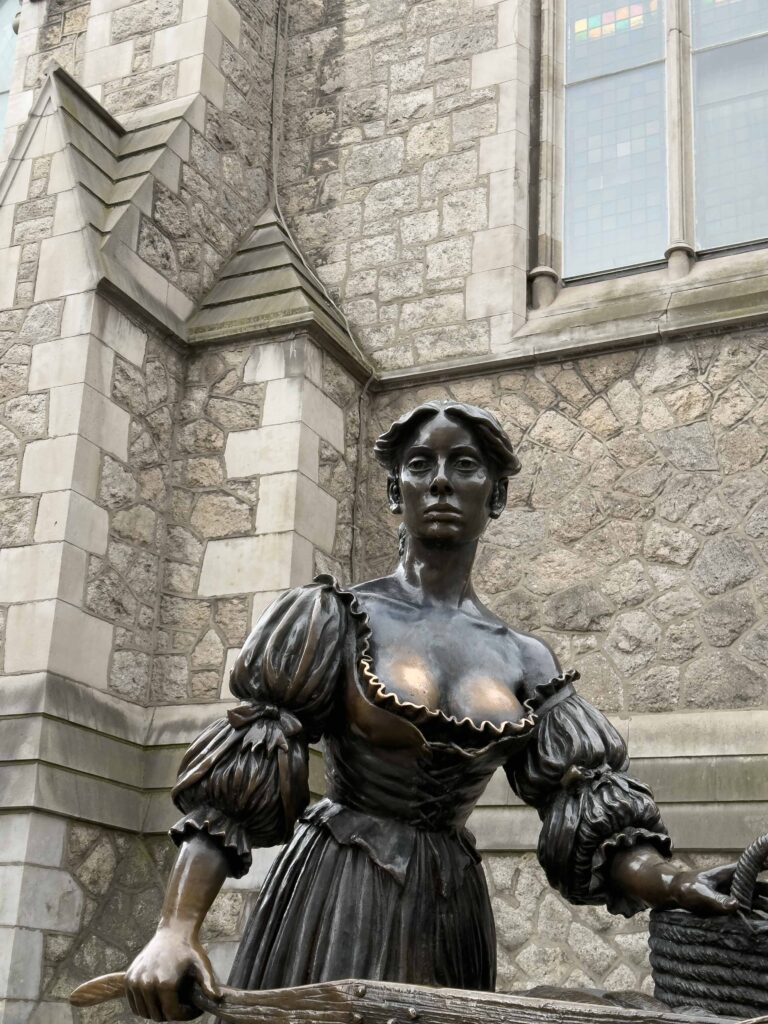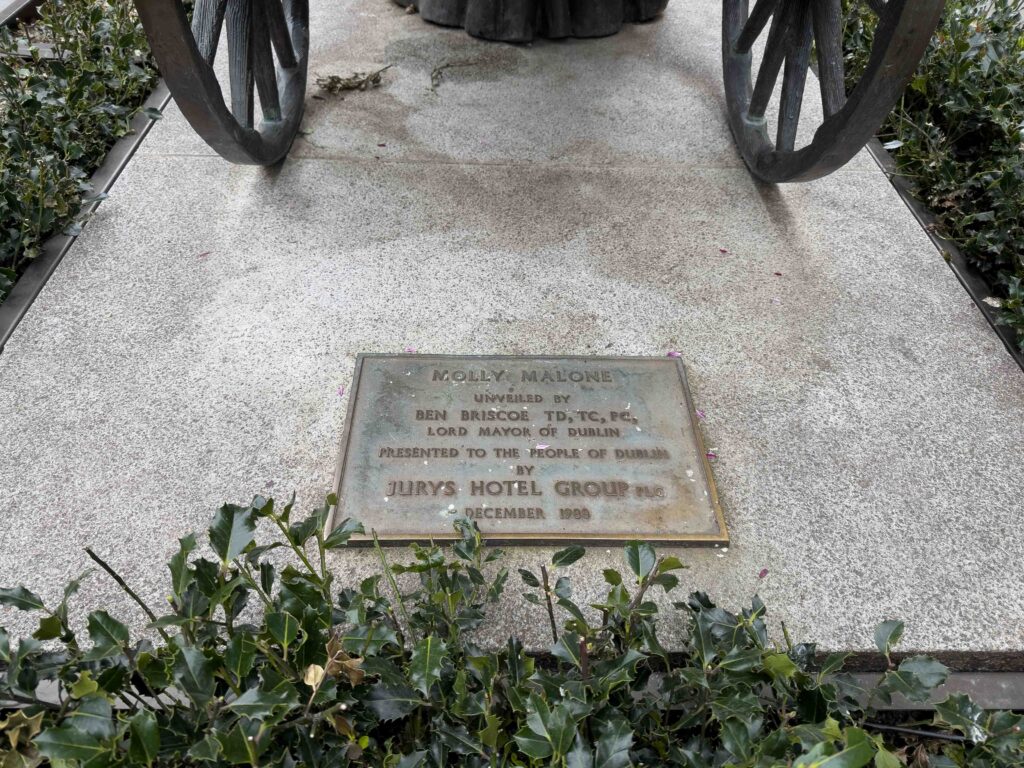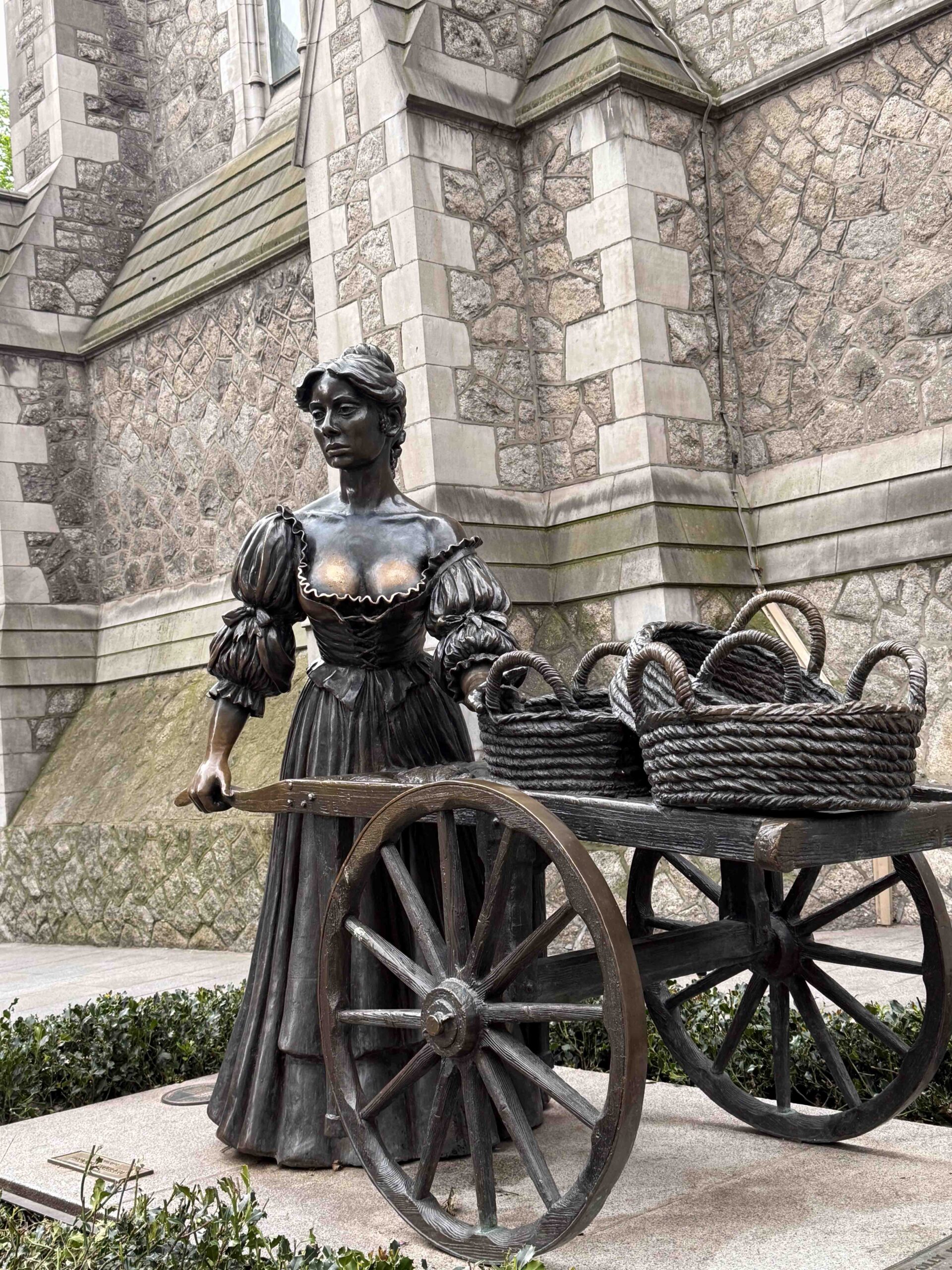

Standing beside a stone church in the heart of Dublin, Molly Malone pauses forever behind her handcart, a basket in one hand and the cart handle in the other. Cast in bronze, it appears no one would get in her way as she walked the streets of Dublin.
Although we had plans to visit her statue while in Dublin, we stumbled by her location quite by coincidence as we walked to dinner on our first night in the city. The statue is one of Dublin’s most recognizable symbols, immortalized in the beloved song that tells the story of a fishmonger who cried:
“Cockles and mussels, alive, alive-o!”
Whether Molly was a real person or simply a character from folklore remains uncertain, but her story has become woven into the identity of Dublin itself. The song is known around the world, and generations of Dubliners have embraced her as a symbol of the city’s resilience, humor, and working-class heritage.
What struck us most was the contrast between the statue and its surroundings. The weathered stone walls behind her seem perfectly suited to her story, creating a scene that feels timeless. The bronze surface shines where countless visitors have paused for photographs (and taken liberties), while Molly’s steady gaze appears fixed on the next customer who might wander by.
Molly Malone reminds visitors that Dublin’s history is also the story of ordinary people whose lives shaped the character of the city.
“In Dublin’s fair city, where the girls are so pretty…”
And for a few moments, it felt as though Molly herself was still selling cockles and mussels somewhere just around the next corner.