Among all the remarkable sights we encountered in Stockholm, none was more unexpected than the Vasa. At first glance, it appears to be a beautifully preserved seventeenth-century warship. In reality, it is both a masterpiece of naval engineering and one of history’s most famous maritime disasters. Where’s Leonardo DiCaprio when you need him?
The Vasa was commissioned by Sweden’s King Gustavus Adolphus during a period when Sweden was emerging as a major European power. Intended to be the pride of the Swedish navy, the ship was designed to project military strength and royal prestige. Measuring nearly 230 feet in length and carrying dozens of bronze cannons, the Vasa was among the most heavily armed warships of its era.
But…
After years of construction and enormous expense, the Vasa sailed only about a mile on her maiden voyage. A gust of wind caught her sails, the ship heeled dangerously, water rushed through the open gun ports, and within minutes Sweden’s greatest warship sank in Stockholm Harbor. Blub, blub.
The embarrassment was immense. The ship that had been built to symbolize Sweden’s power instead became a cautionary tale about ambition, politics, and engineering compromise.
For more than three centuries, the Vasa remained at the bottom of the harbor.
Then, in one of the most extraordinary archaeological recoveries ever undertaken, the ship was rediscovered and raised in 1961. Because the cold, low-salinity waters of the Baltic Sea lacked the shipworms that normally destroy wooden vessels, the Vasa survived in astonishing condition. Today, more than 95 percent of the ship’s original timber remains intact.
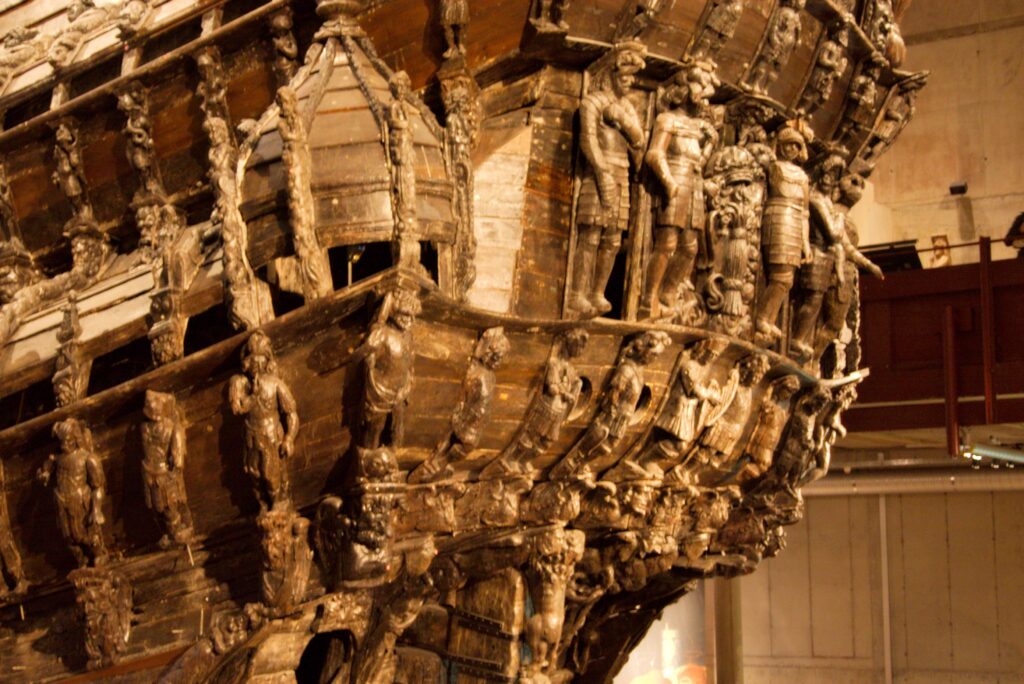
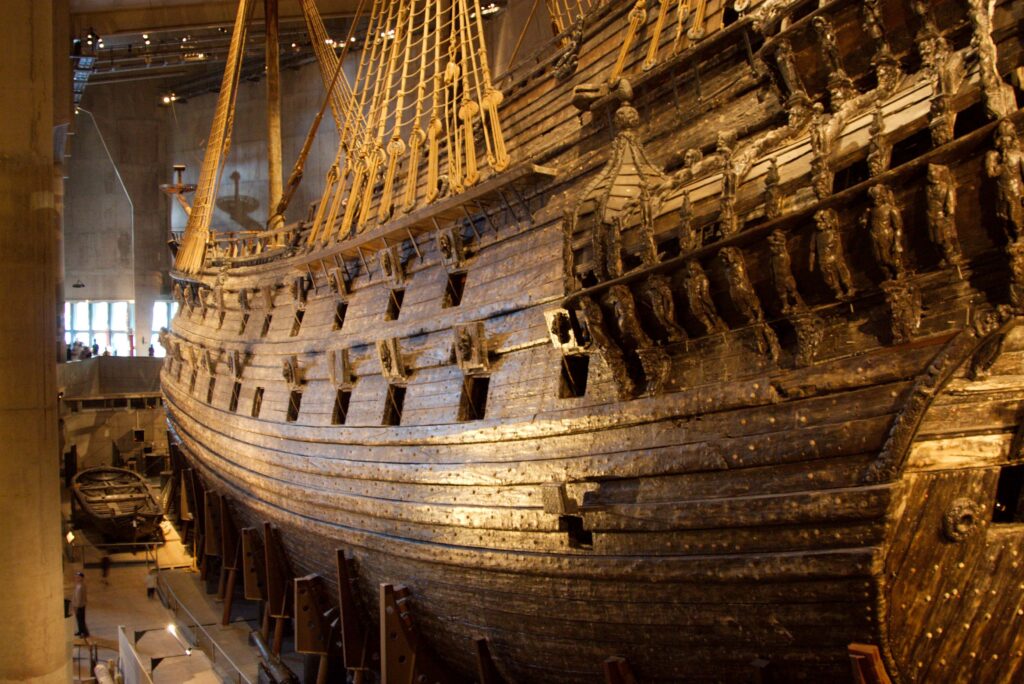
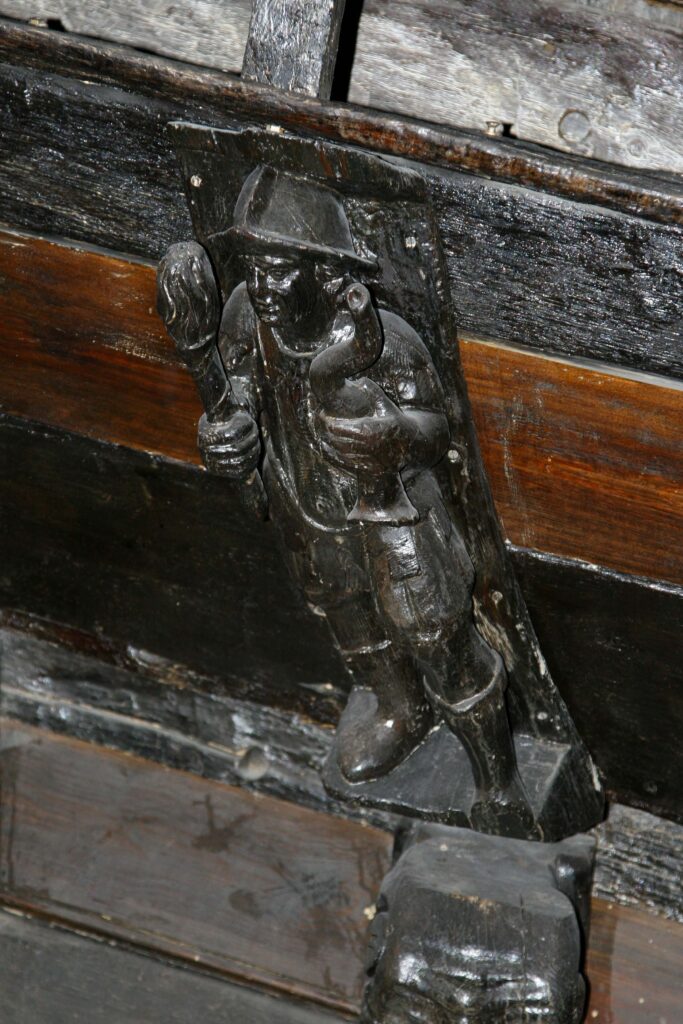
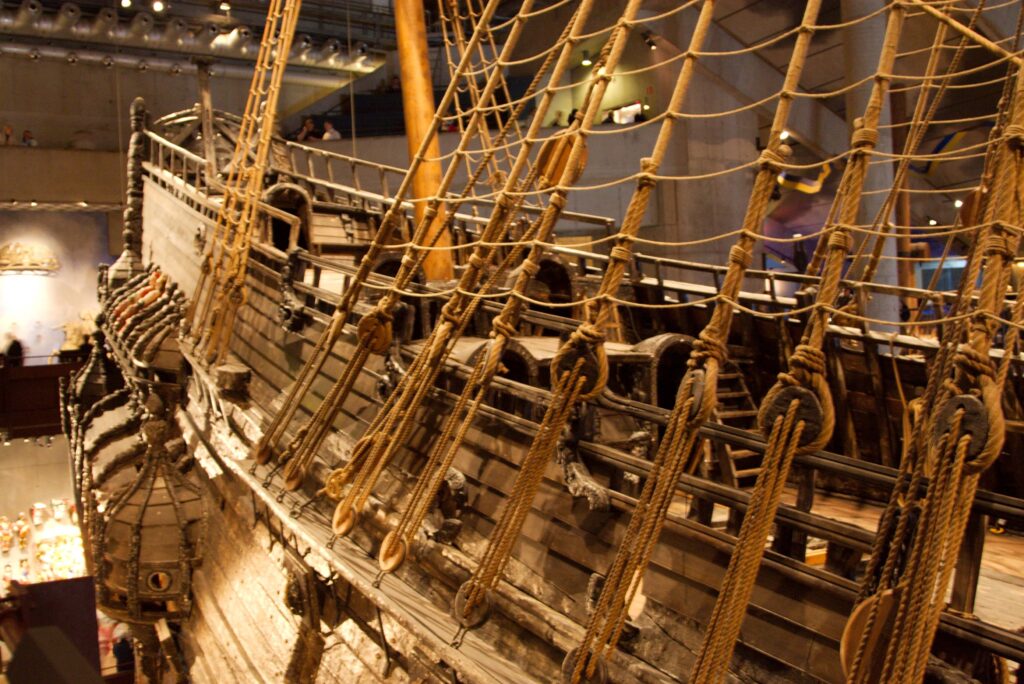
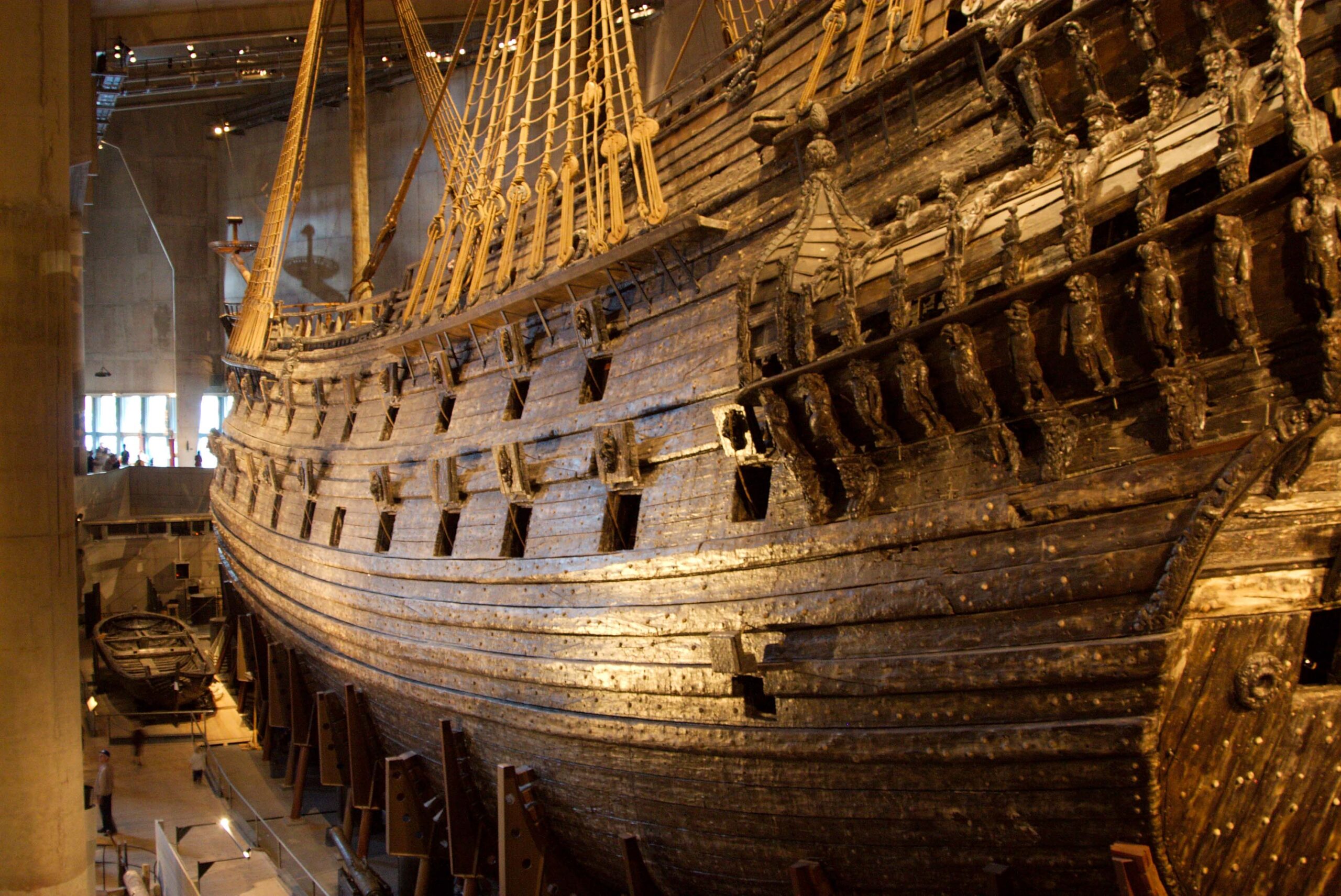
Standing before the vessel, the sheer scale is breathtaking. The dark oak hull towers above visitors, its massive sides lined with gun ports and intricate carvings. From a distance, it appears almost ready to sail.
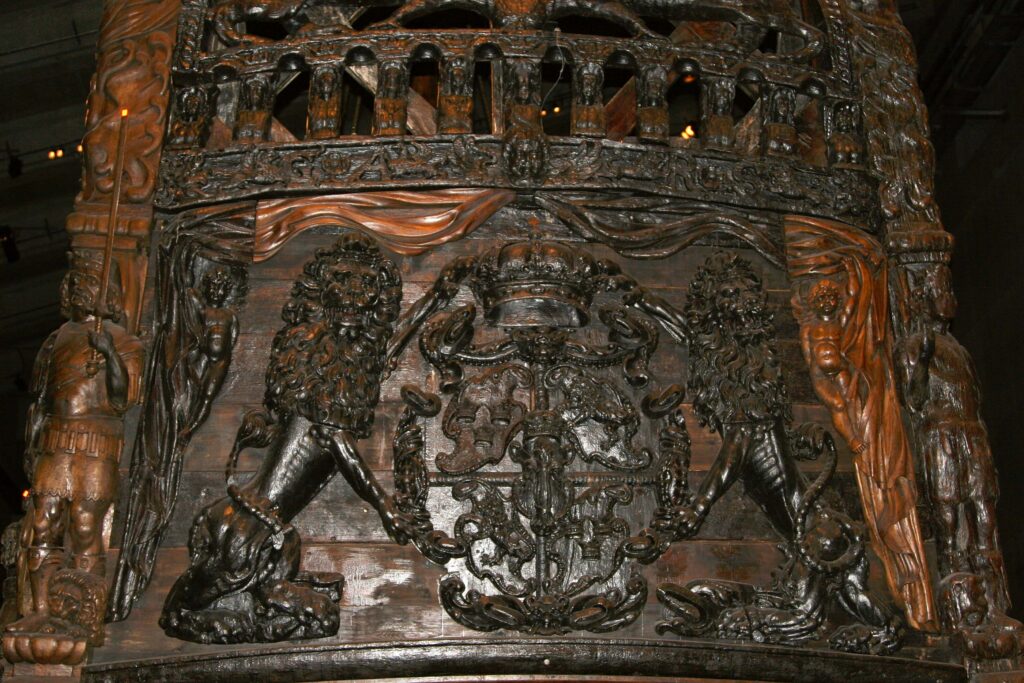
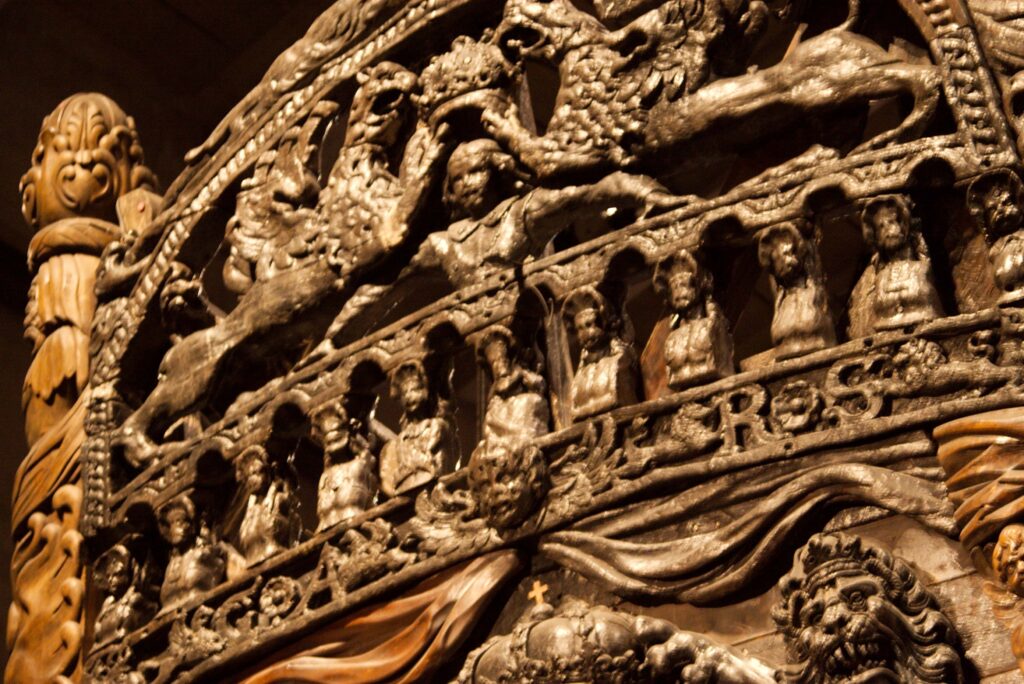
Particularly striking are the stern decorations, where elaborate sculptures frame the royal coat of arms. These carvings transformed the ship into a floating political statement. The stern was effectively a giant billboard announcing Swedish power to the world.
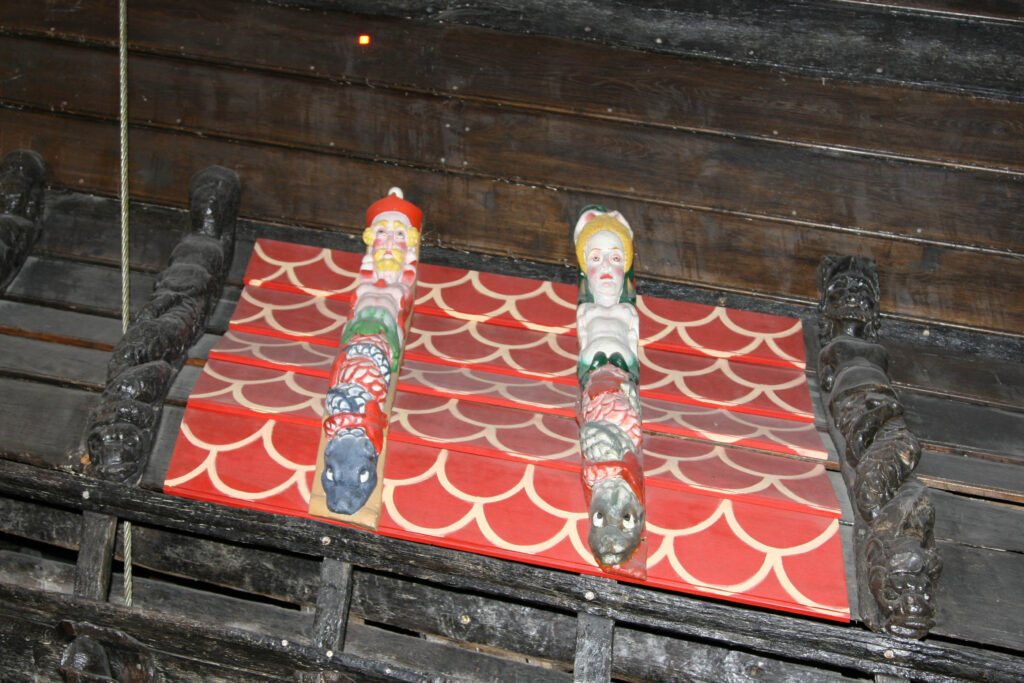
The museum also reveals another fascinating story. While the ship itself appears dark today, many of the decorative sculptures were originally painted in brilliant colors. Reconstructions displayed alongside the vessel demonstrate how vivid and almost theatrical the ship would have appeared in 1628. What seems austere now would have dazzled contemporaries with reds, blues, golds, and greens.
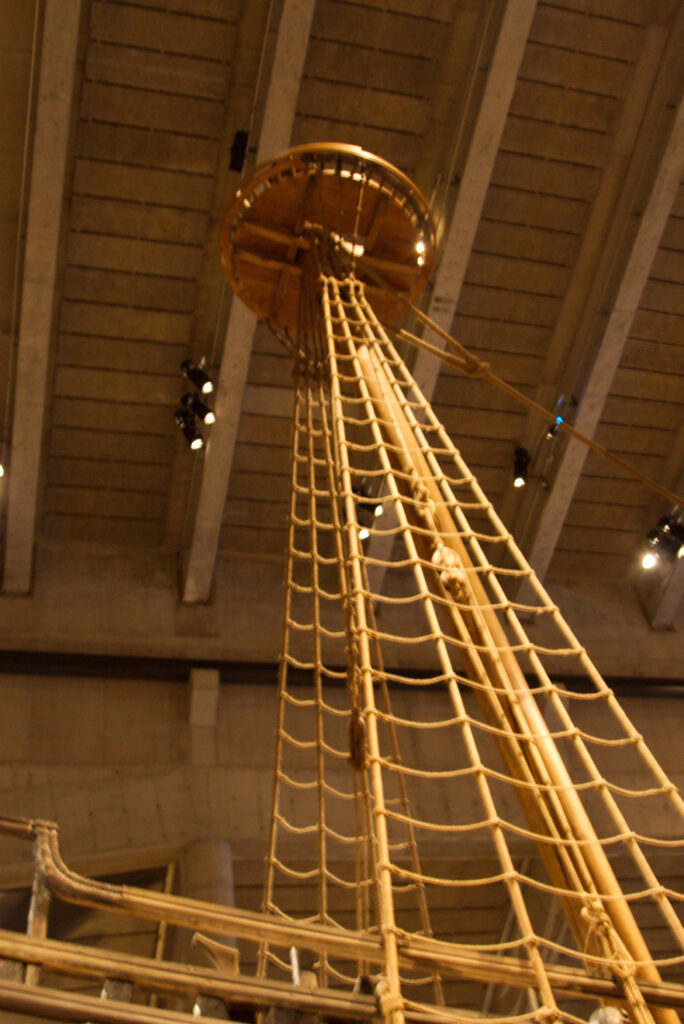
Looking up through the maze of rigging and towering masts, it becomes easier to imagine the lives of the sailors who served aboard. The ropes, pulleys, ladders, and fighting platforms hint at the complexity of operating such a vessel. Every movement required coordination, discipline, and skill.
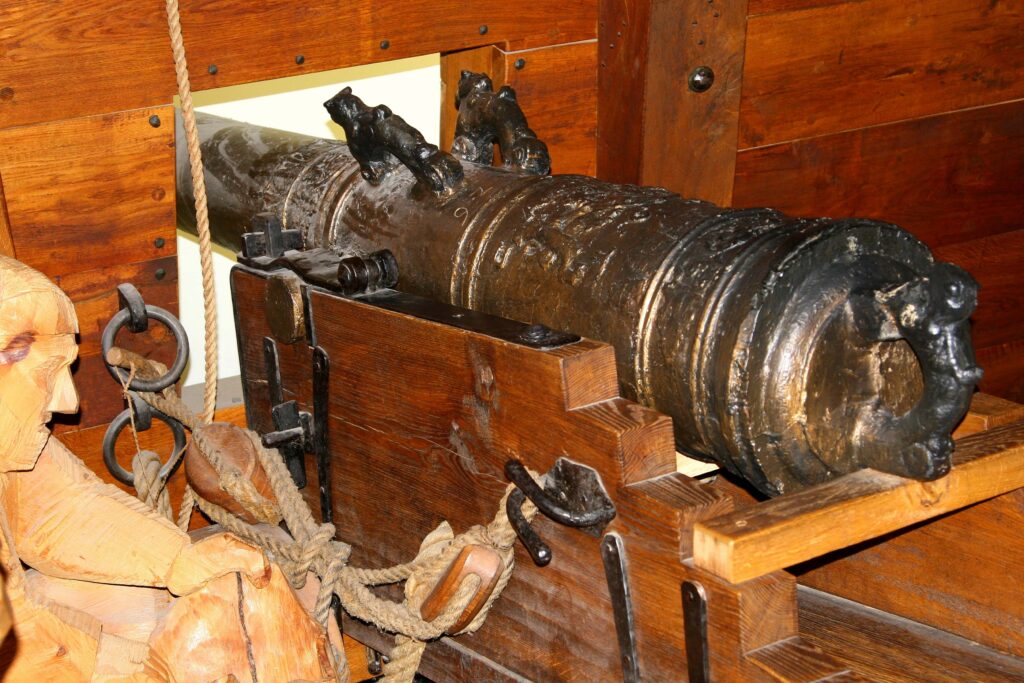
The cannons tell another part of the story. Cast from bronze and enormously expensive, they represented a substantial portion of the ship’s cost. Ironically, the weight of these powerful weapons contributed to the instability that ultimately doomed the vessel.
Unlike many museum artifacts, this ship tells a complete story. It embodies ambition, pride, technological achievement, political pressure, and ultimately failure. Yet from that failure emerged one of the world’s greatest maritime treasures.