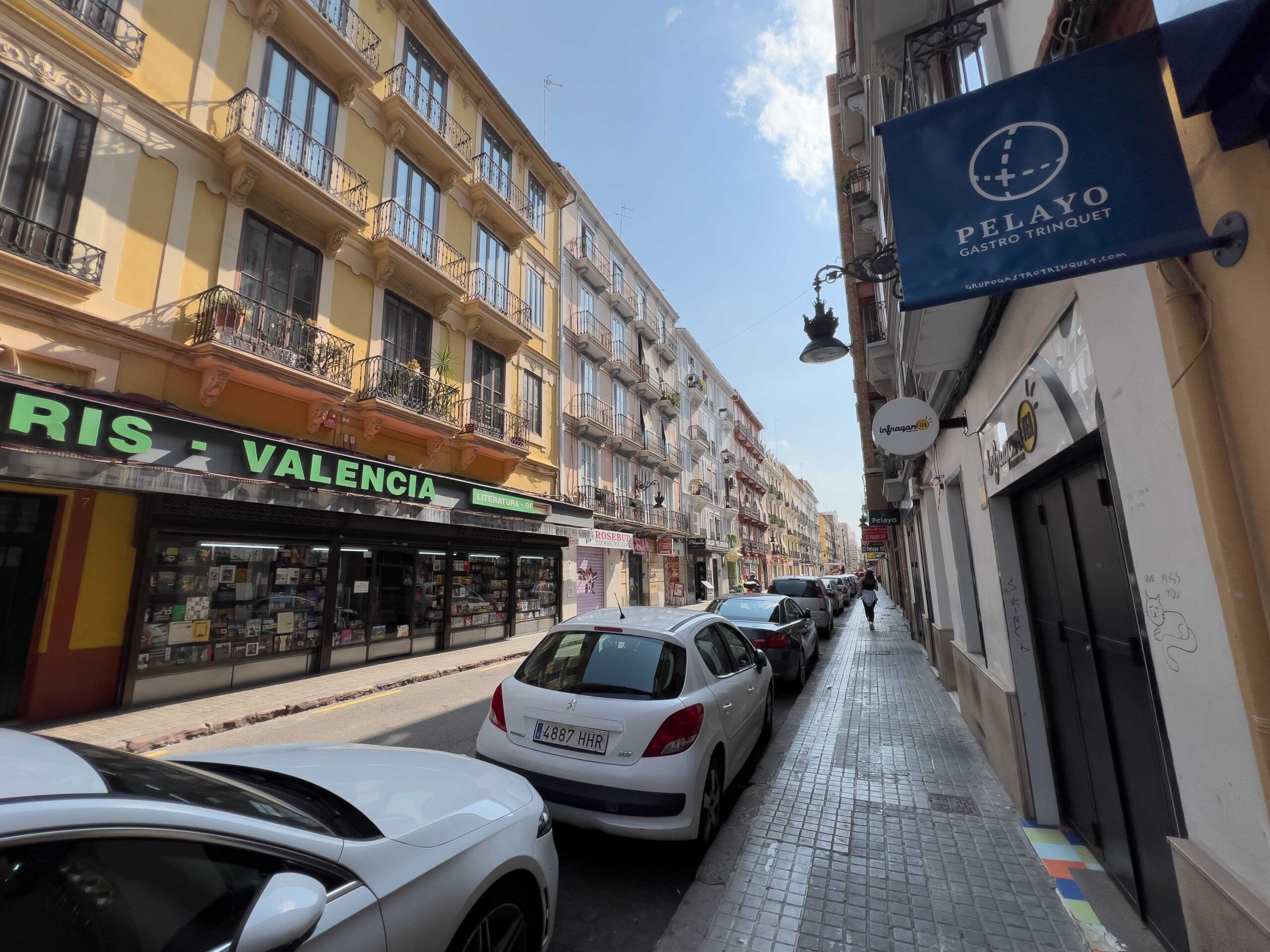
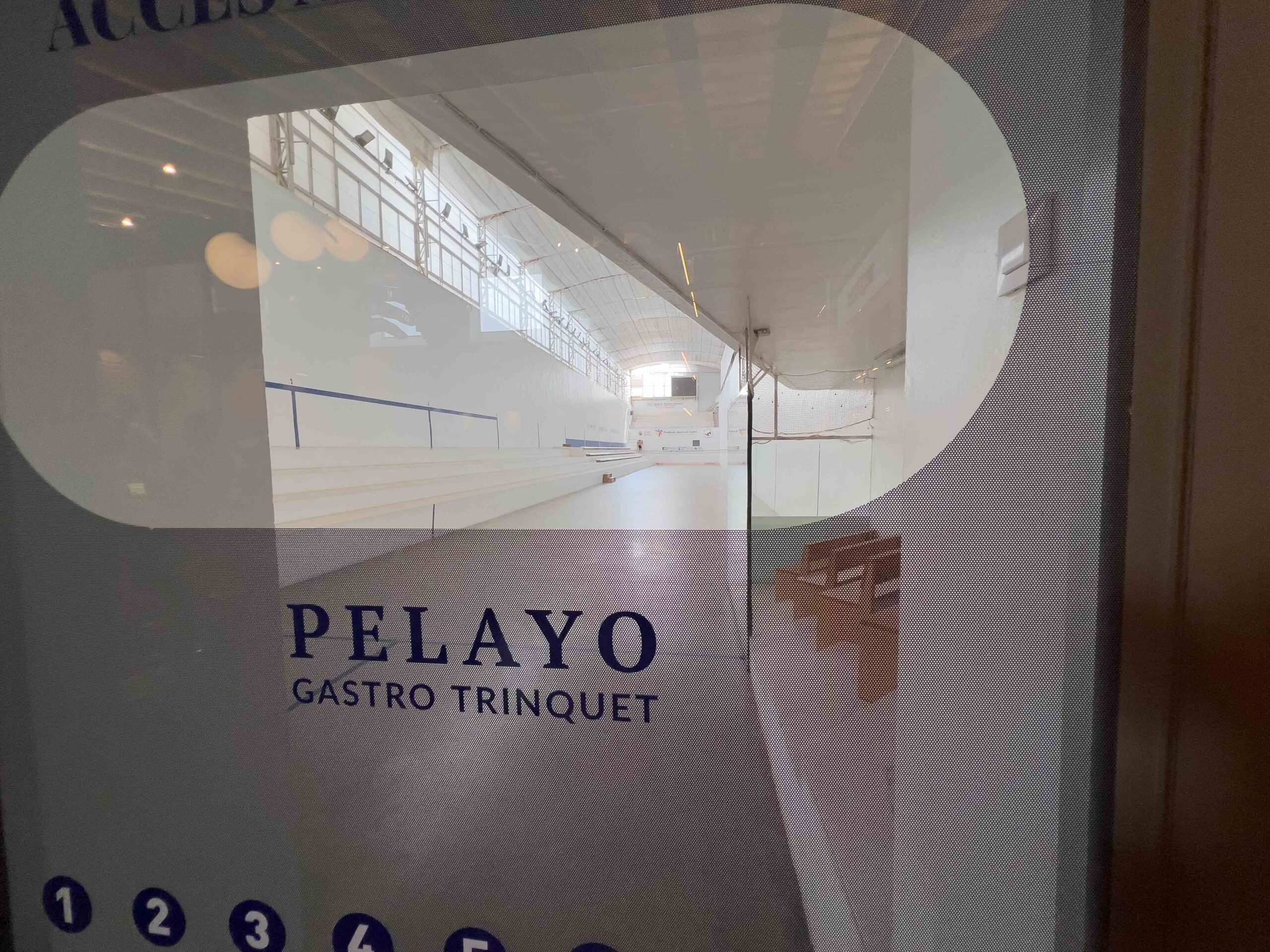
While exploring the historic streets of Valencia with our guide, we were taken to and introduced to one of the city’s most unique dining experiences at Pelayo Gastro Trinquet. Located on a narrow street lined with elegant balconies and colorful facades, the restaurant occupies part of the legendary Trinquet de Pelayo, the most famous venue dedicated to the traditional Valencian sport known simply as pilota.
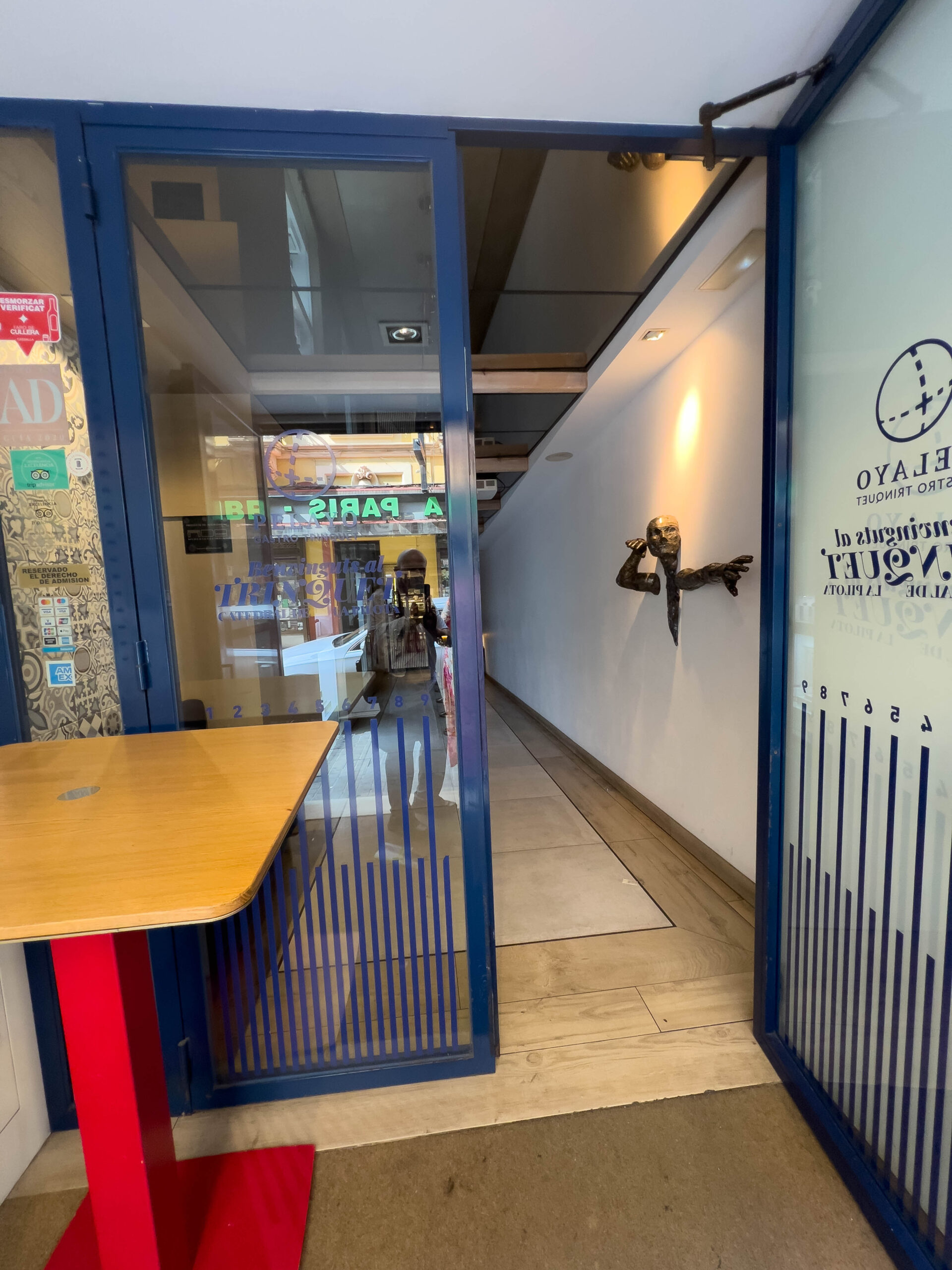
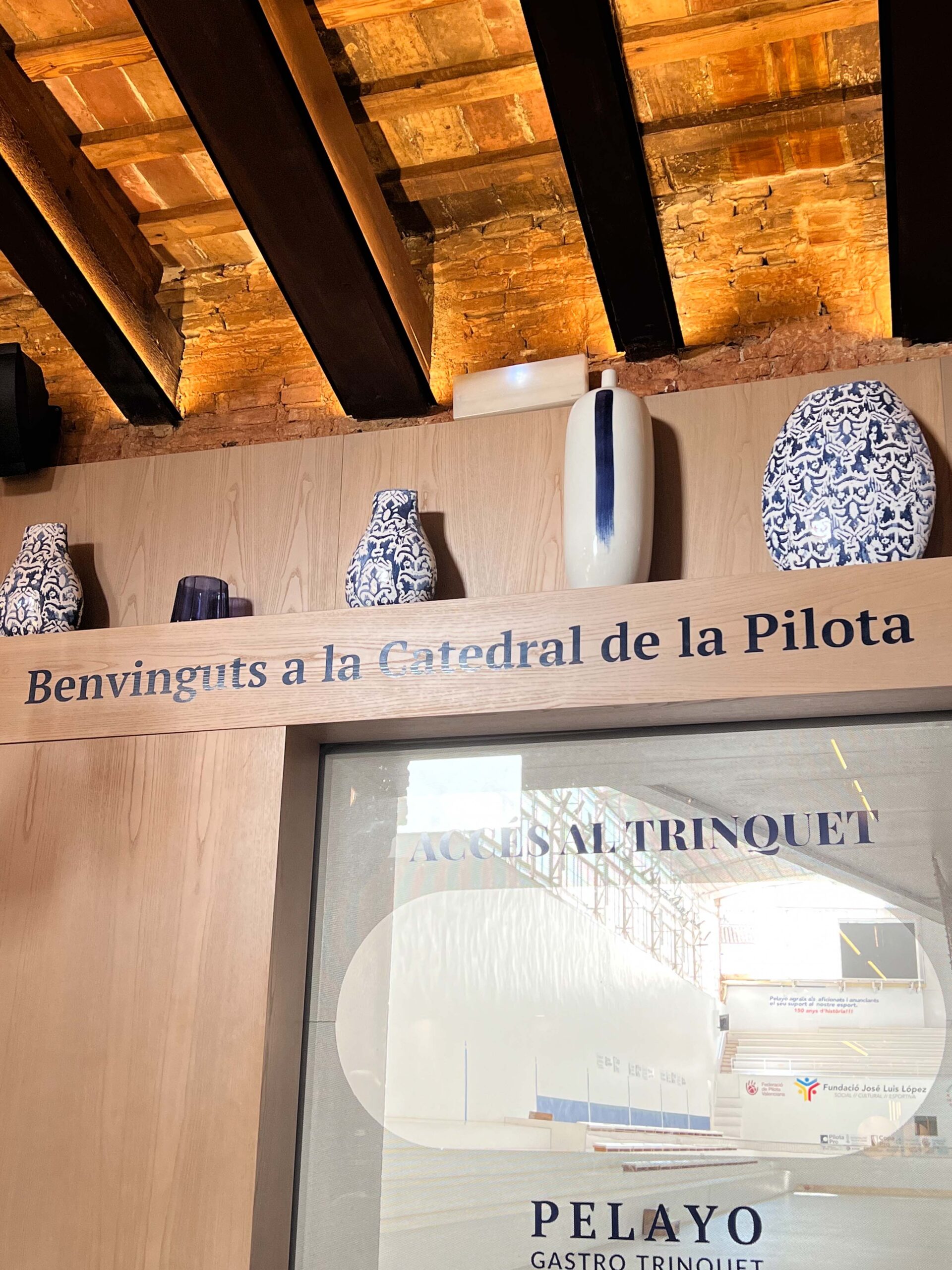
From the outside, Pelayo appears to be another inviting neighborhood restaurant. Stepping inside, however, reveals something entirely different. A sign welcomes visitors to the “Catedral de la Pilota”—the Cathedral of Pilota—a fitting description for a venue that has served as the spiritual home of the sport since the 19th century.
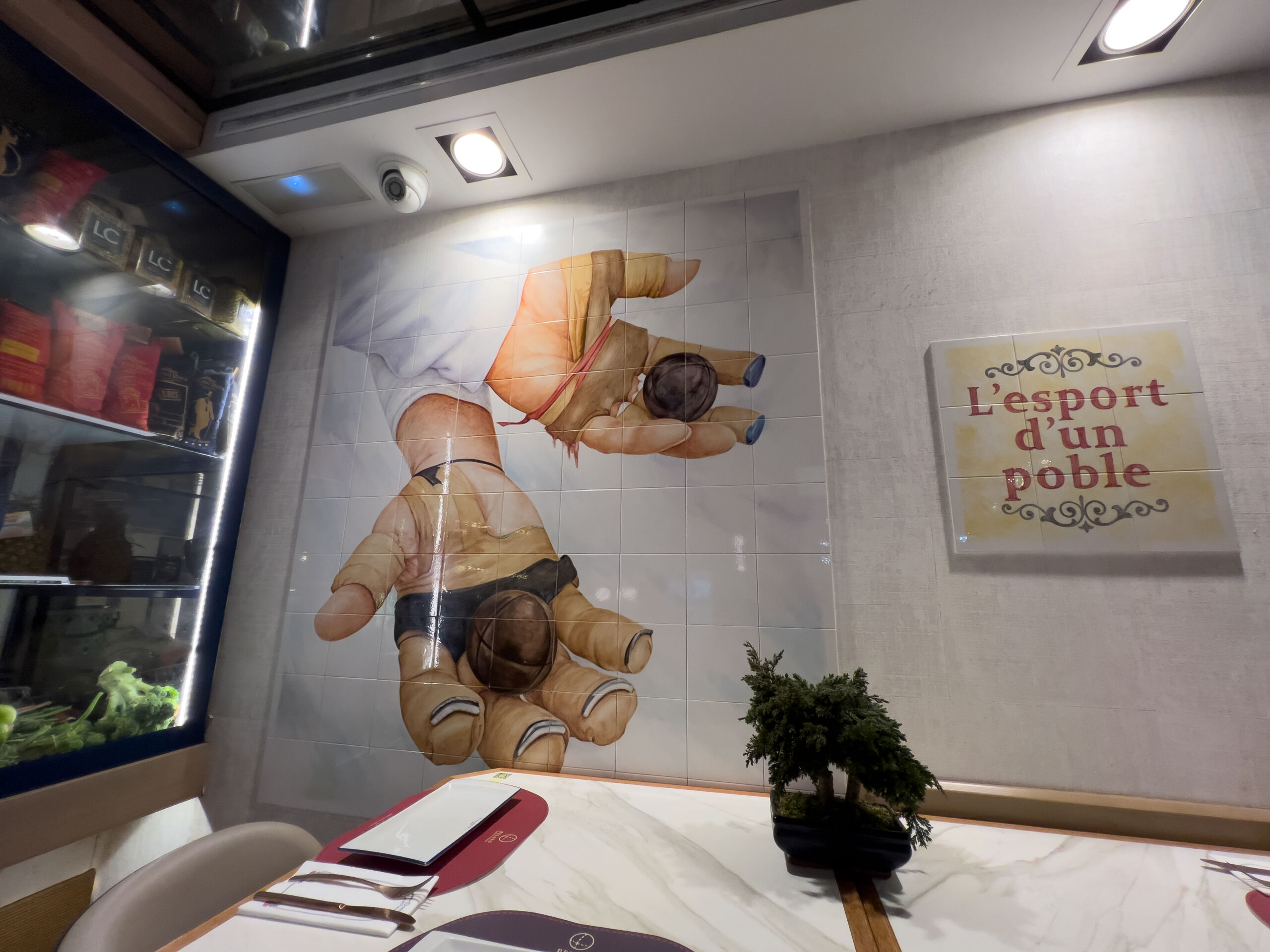
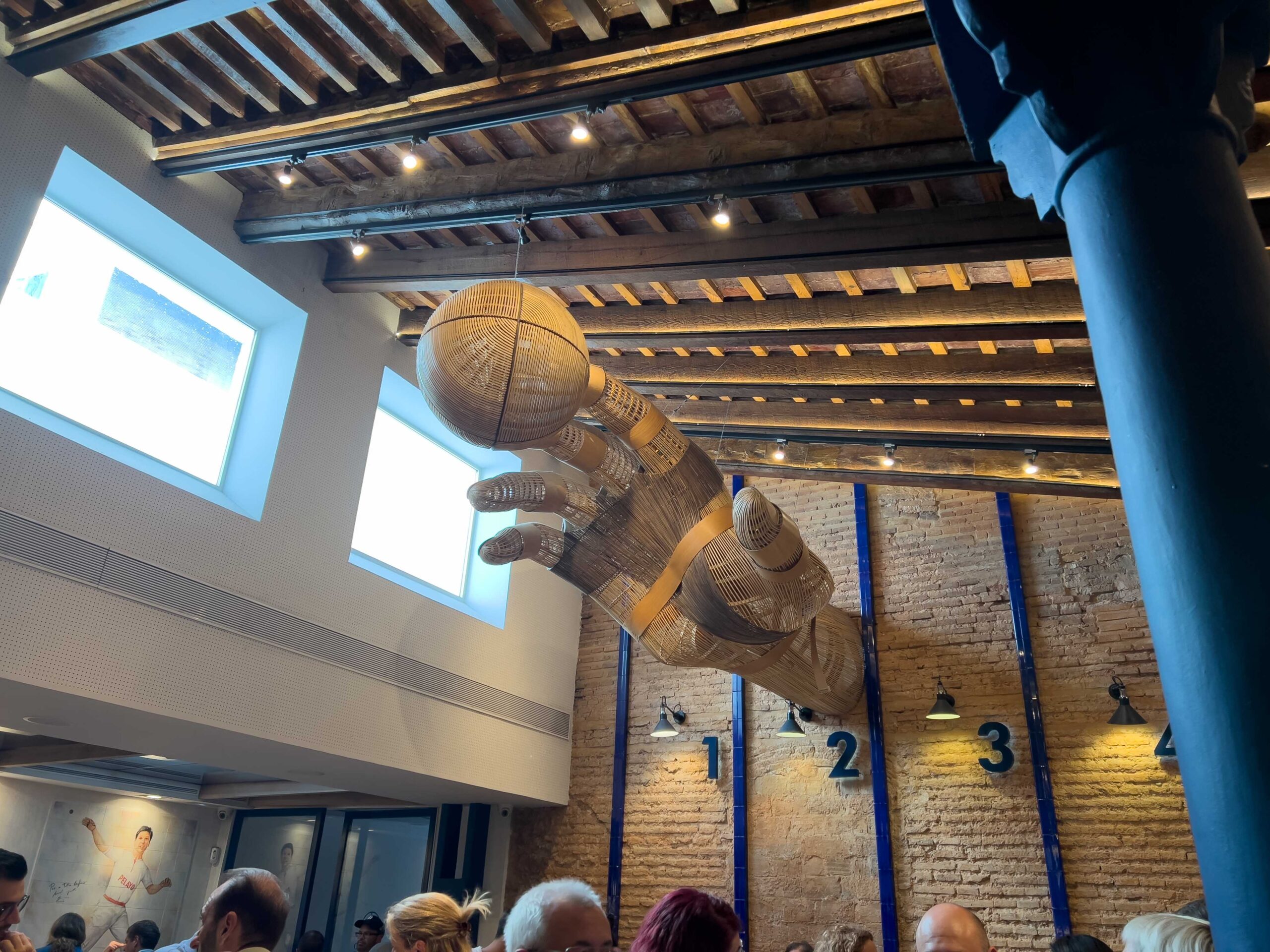
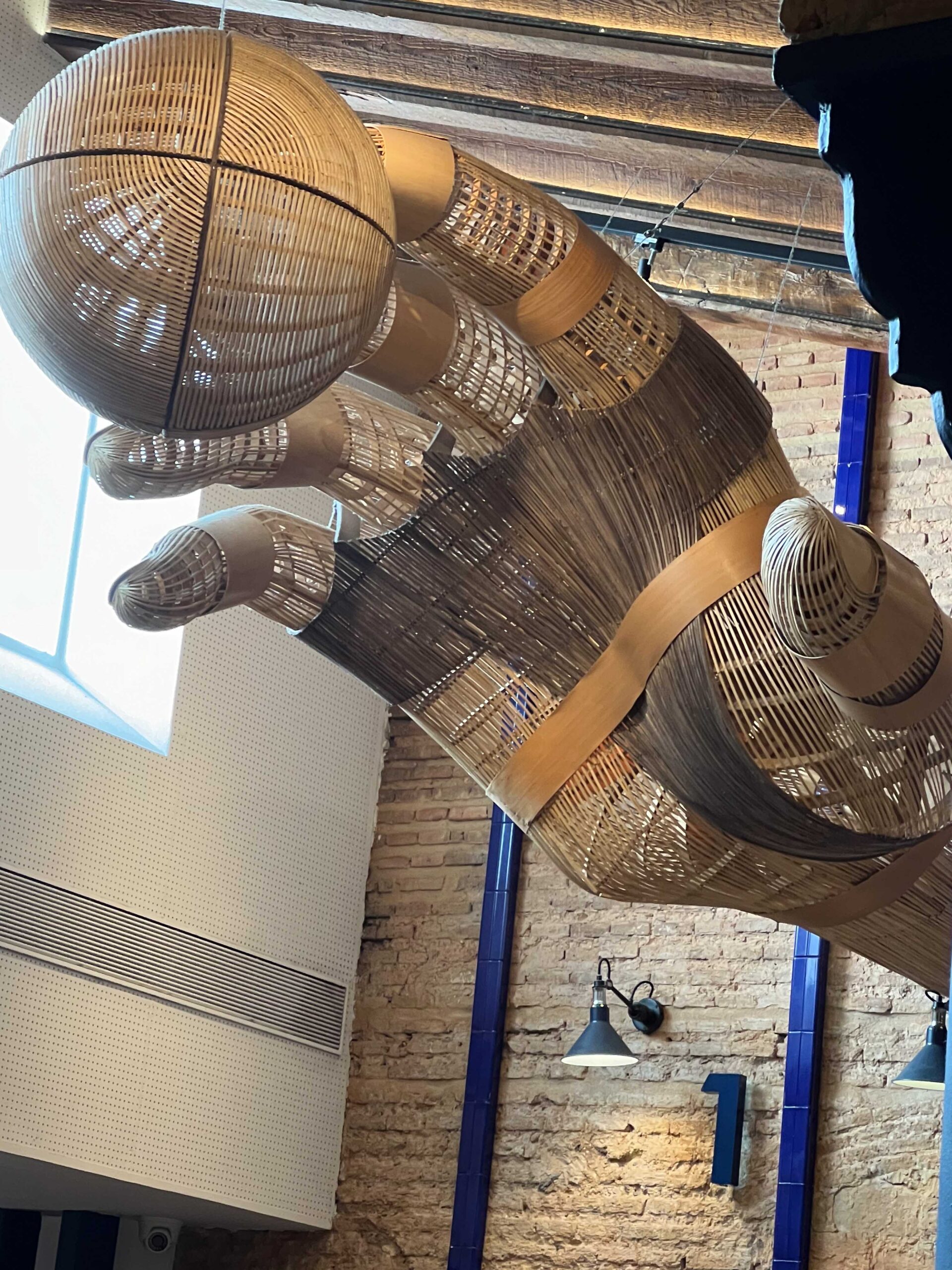
The dining room beautifully celebrates this heritage. Suspended overhead is a massive woven sculpture of a player’s hand gripping a pilota ball, an artistic tribute to the athletes who have competed here for generations. Throughout the restaurant, artwork and decorative elements reflect the culture and traditions surrounding this uniquely Valencian game.
One of the most fascinating features is the view into the trinquet itself. Through interior windows, guests can look directly into the playing court where matches continue to be played today. The juxtaposition of modern gastronomy and centuries-old sporting tradition creates an atmosphere unlike any restaurant we encountered during our travels in Spain.
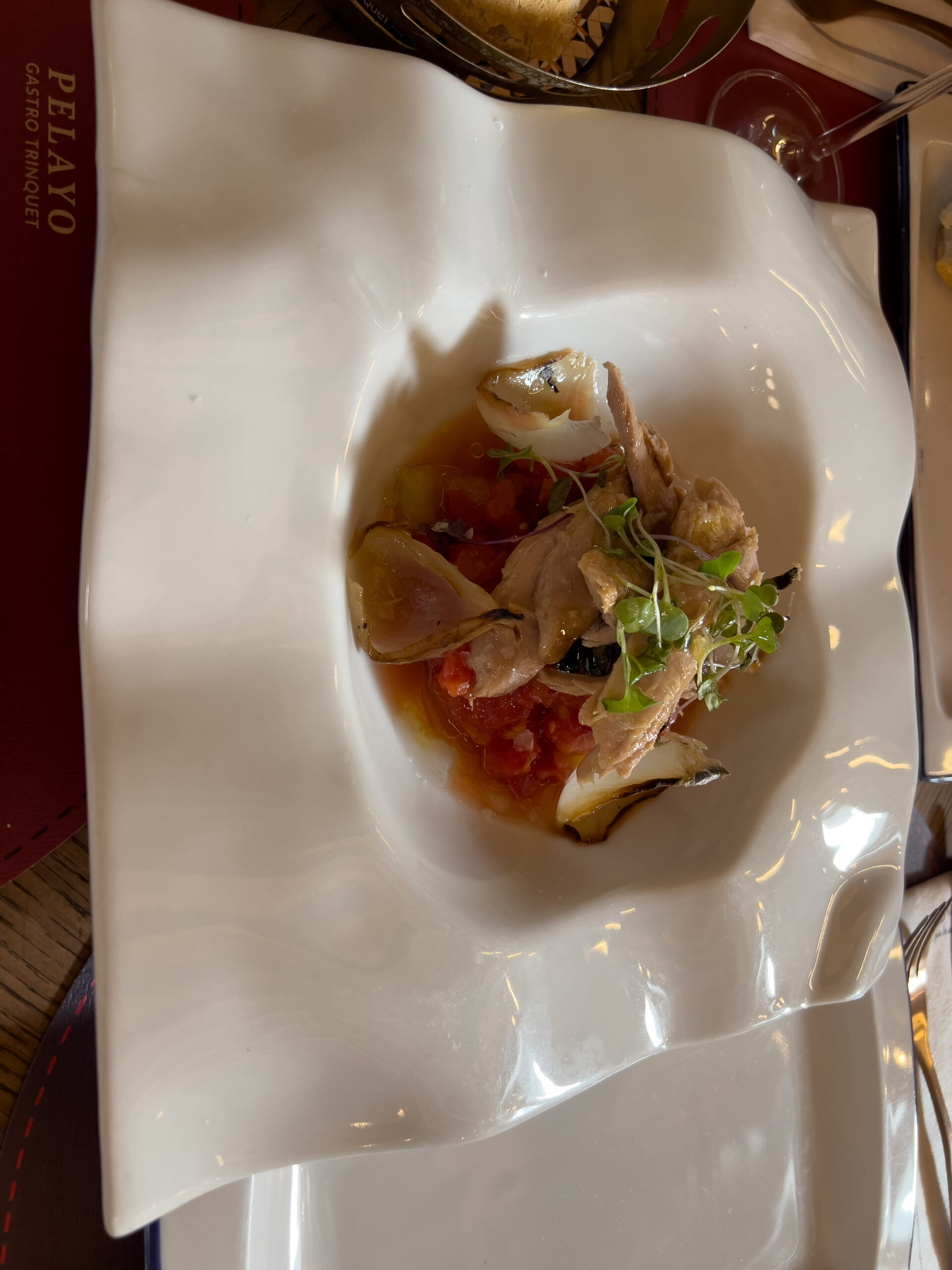
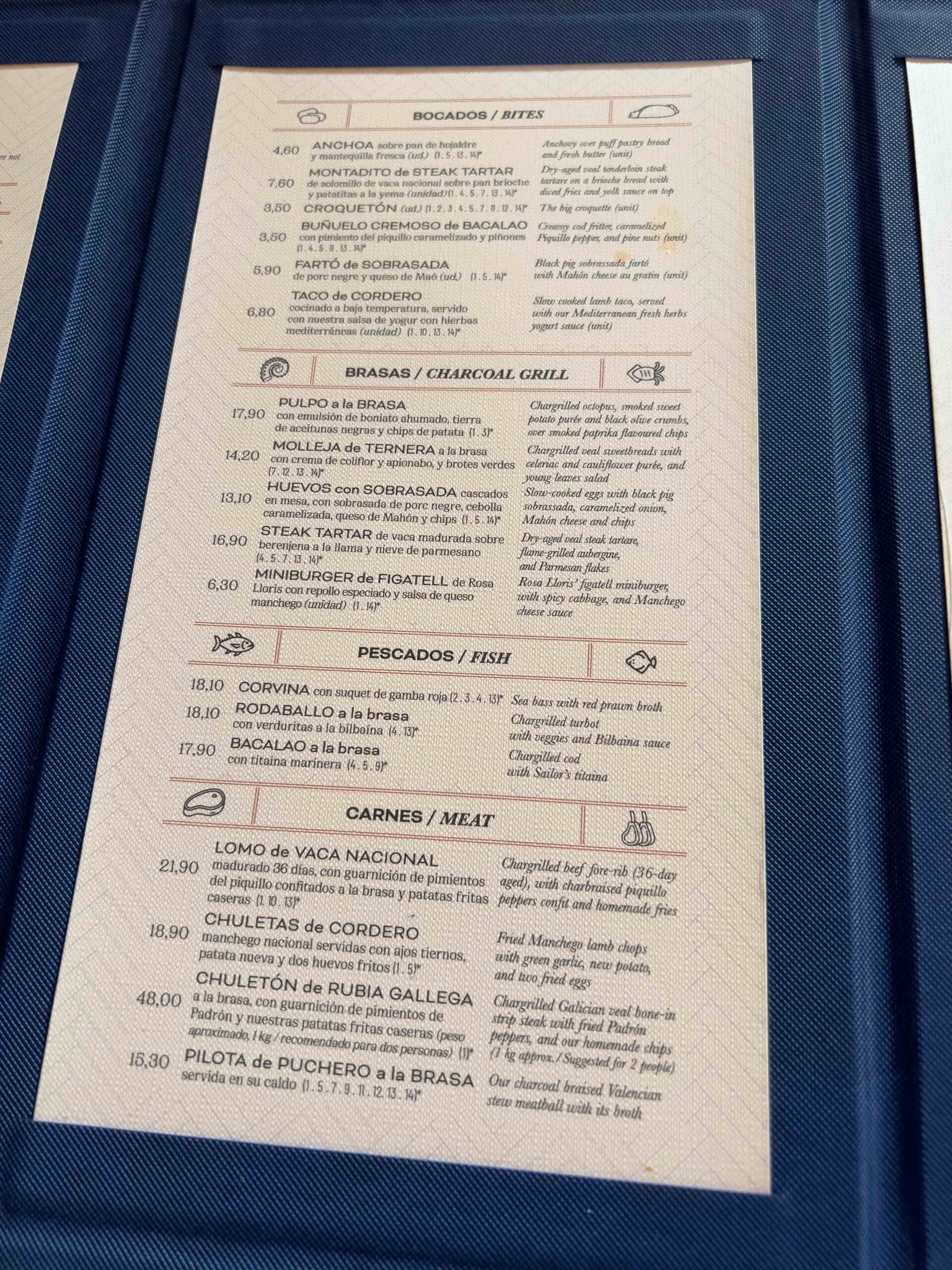
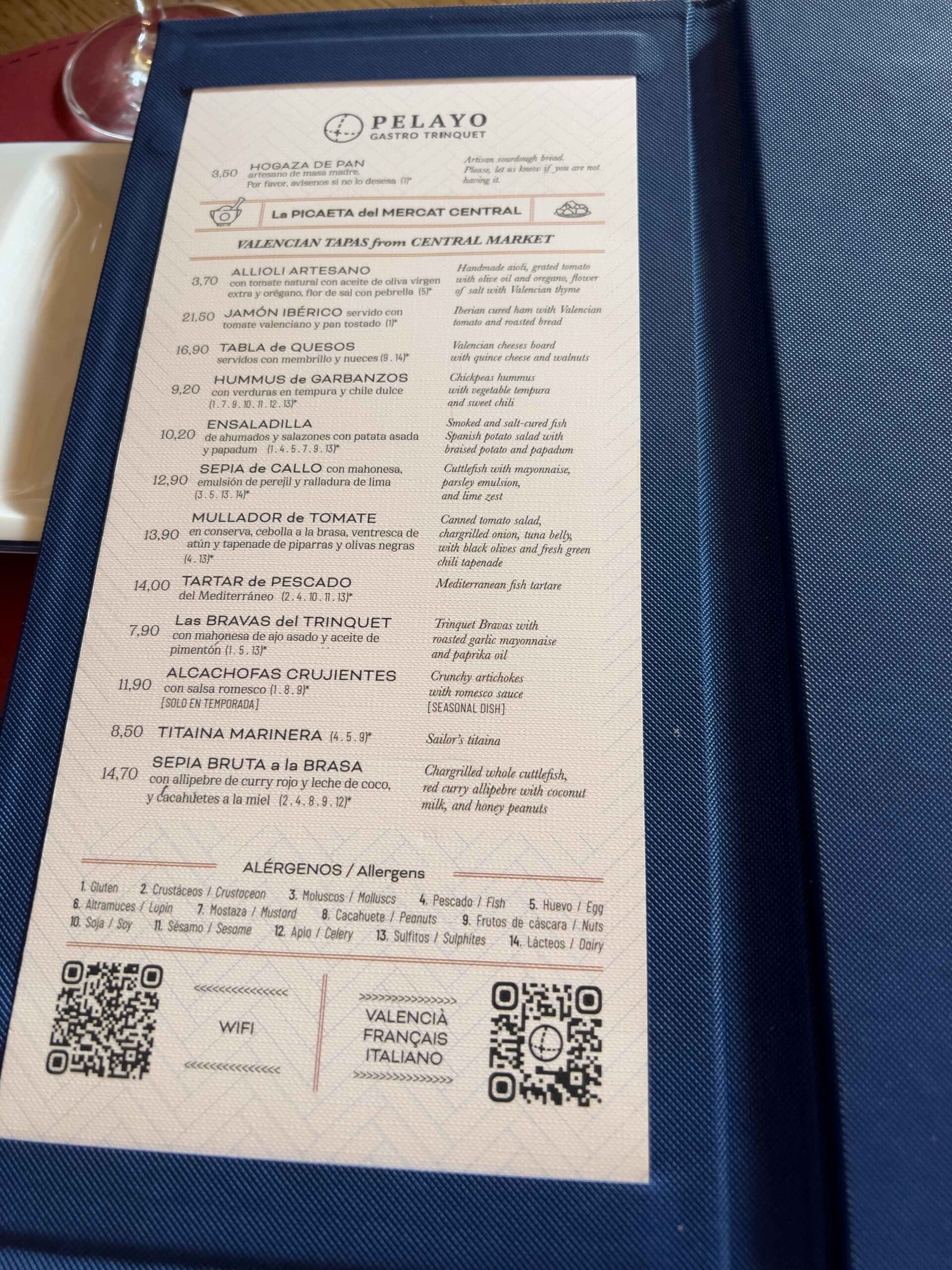
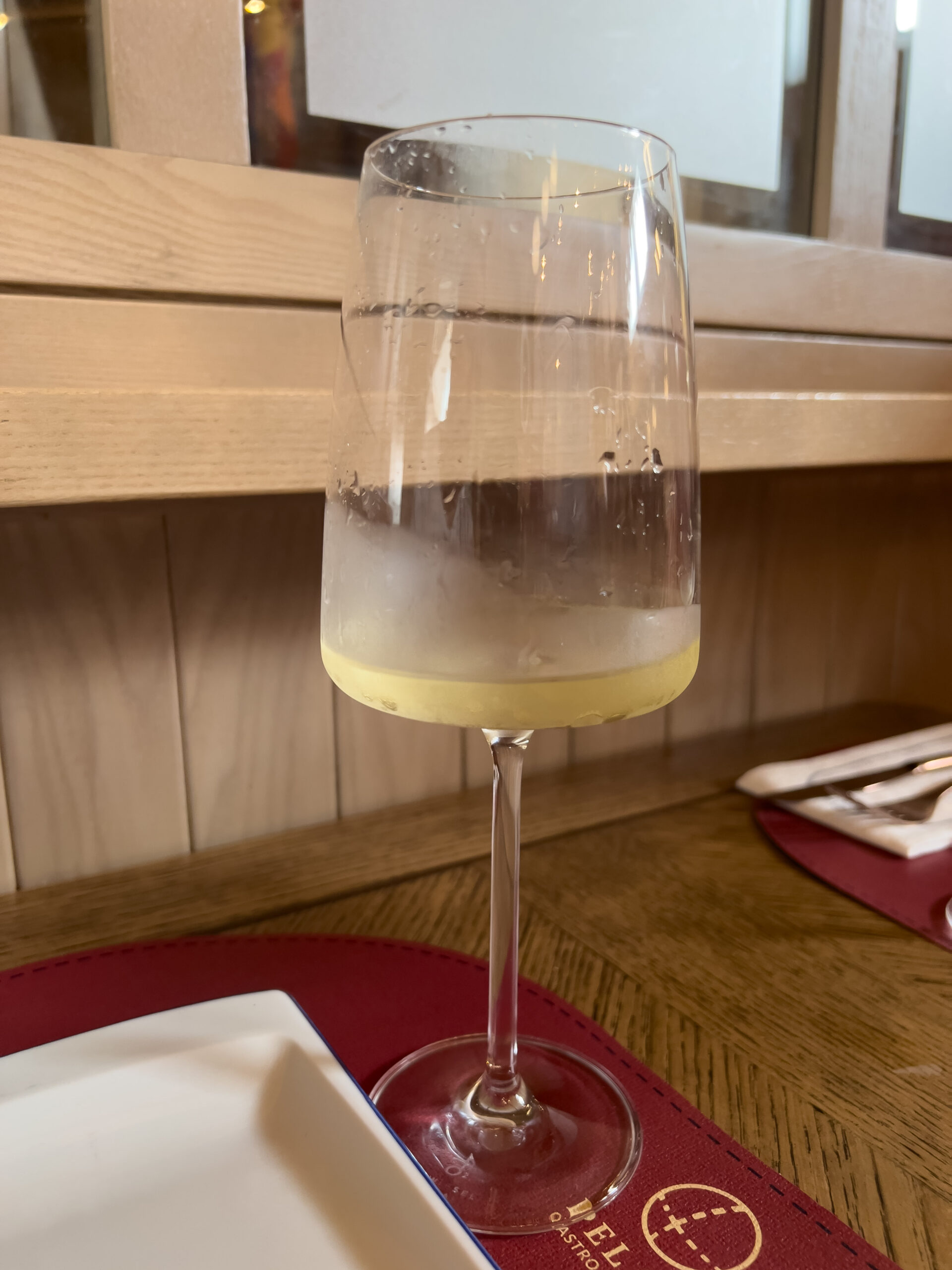
Lunch began with a refreshing glass of chilled local white wine and a selection of traditional Valencian appetizers sourced from Valencia’s famous Central Market. We sampled a beautifully prepared tuna dish accompanied by sweet roasted onions and fresh tomatoes, allowing the quality of the ingredients to shine.
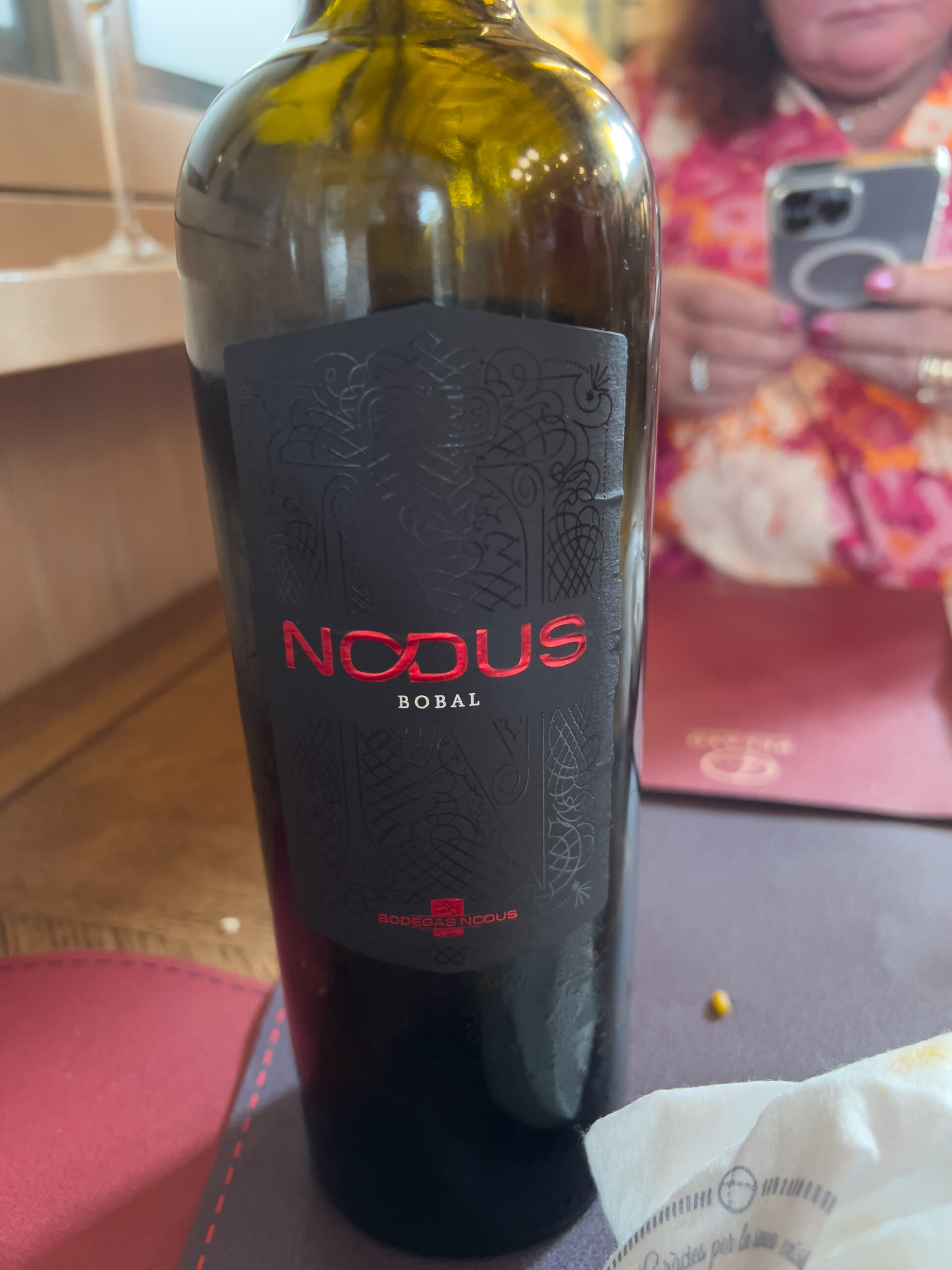
To accompany the meal, we selected a bottle of Nodus Bobal, produced from the indigenous Bobal grape grown in the nearby Utiel-Requena wine region. Rich, expressive, and distinctly Valencian, it proved to be an ideal companion for the courses that followed.
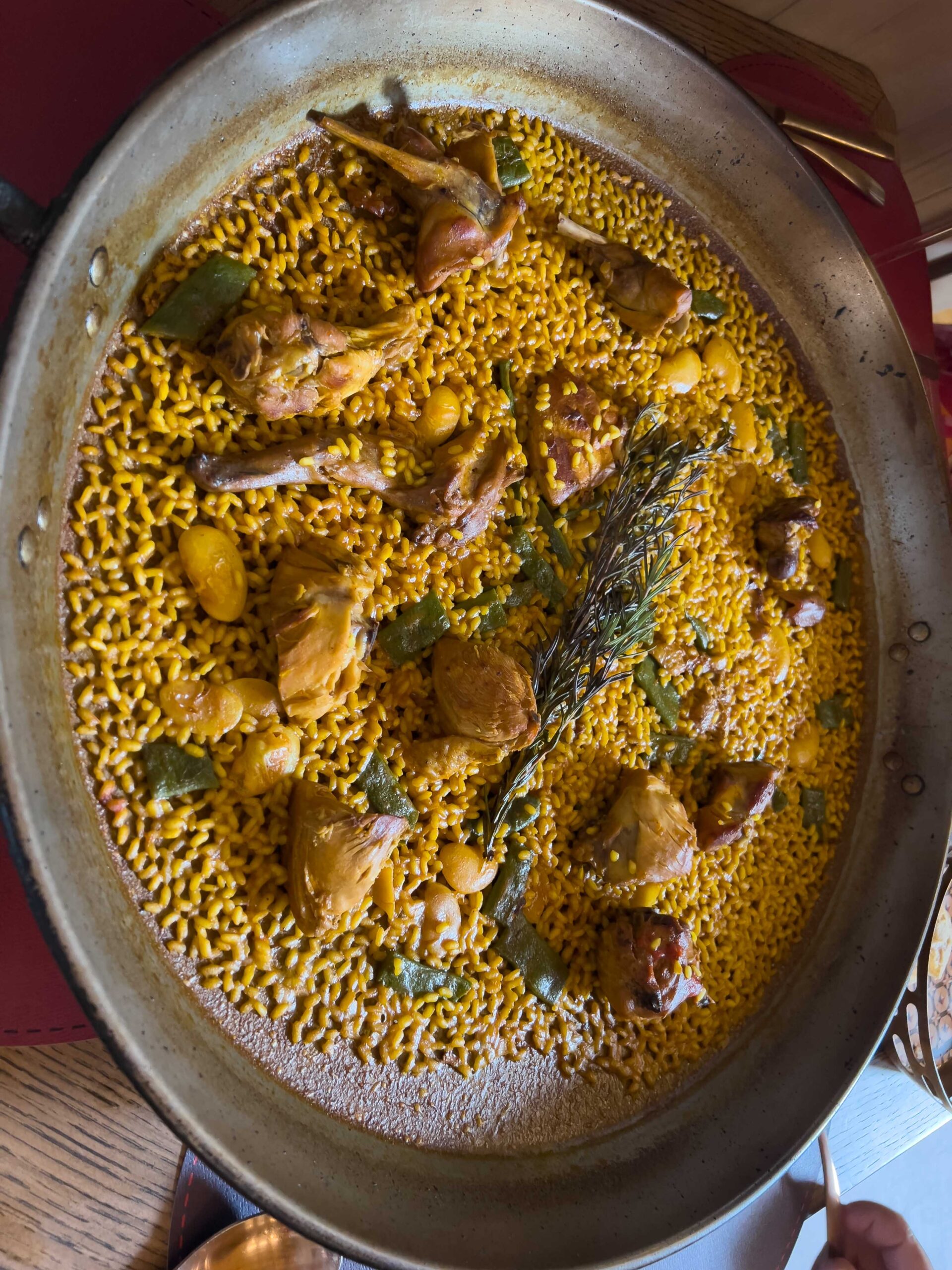
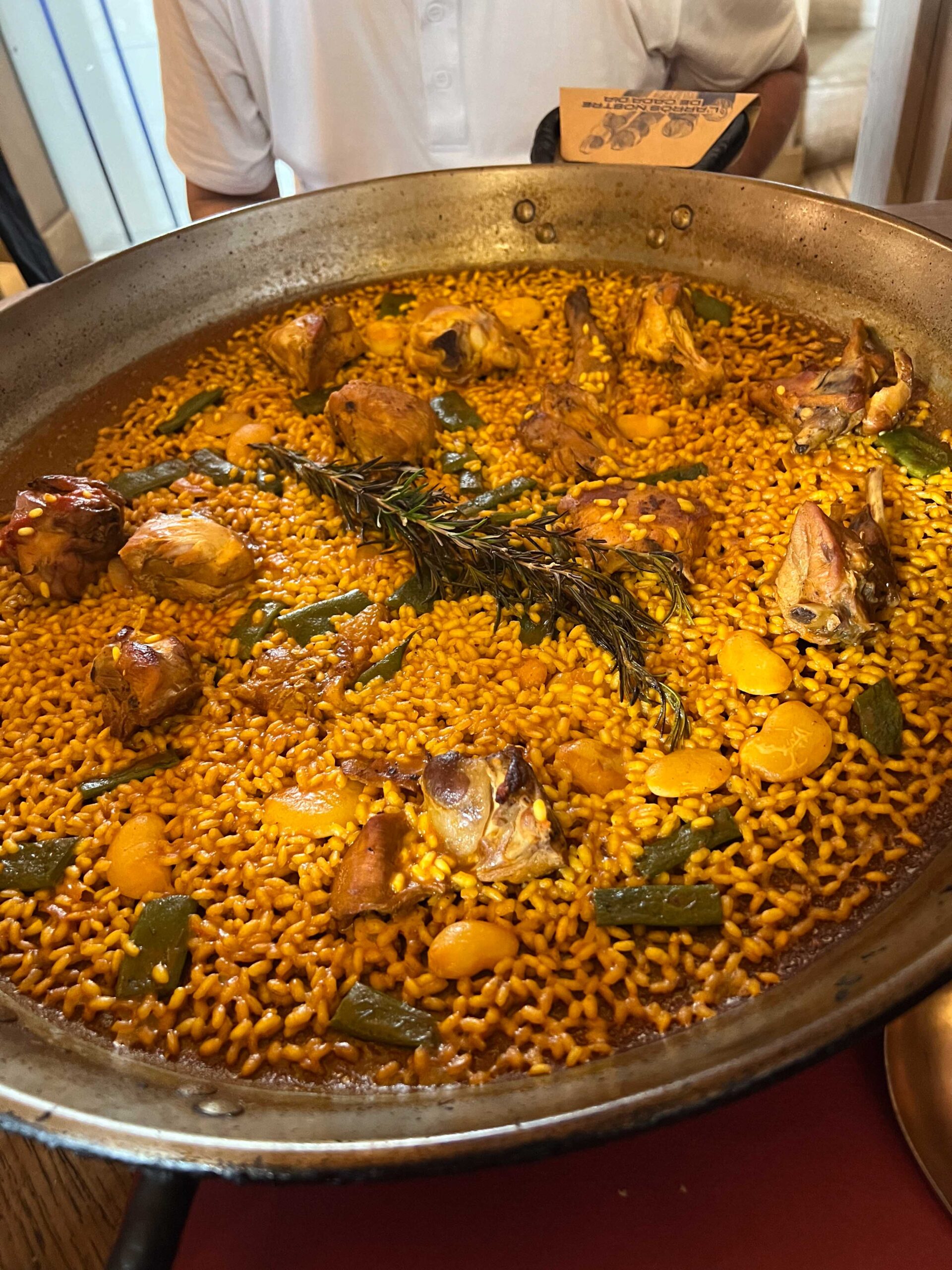
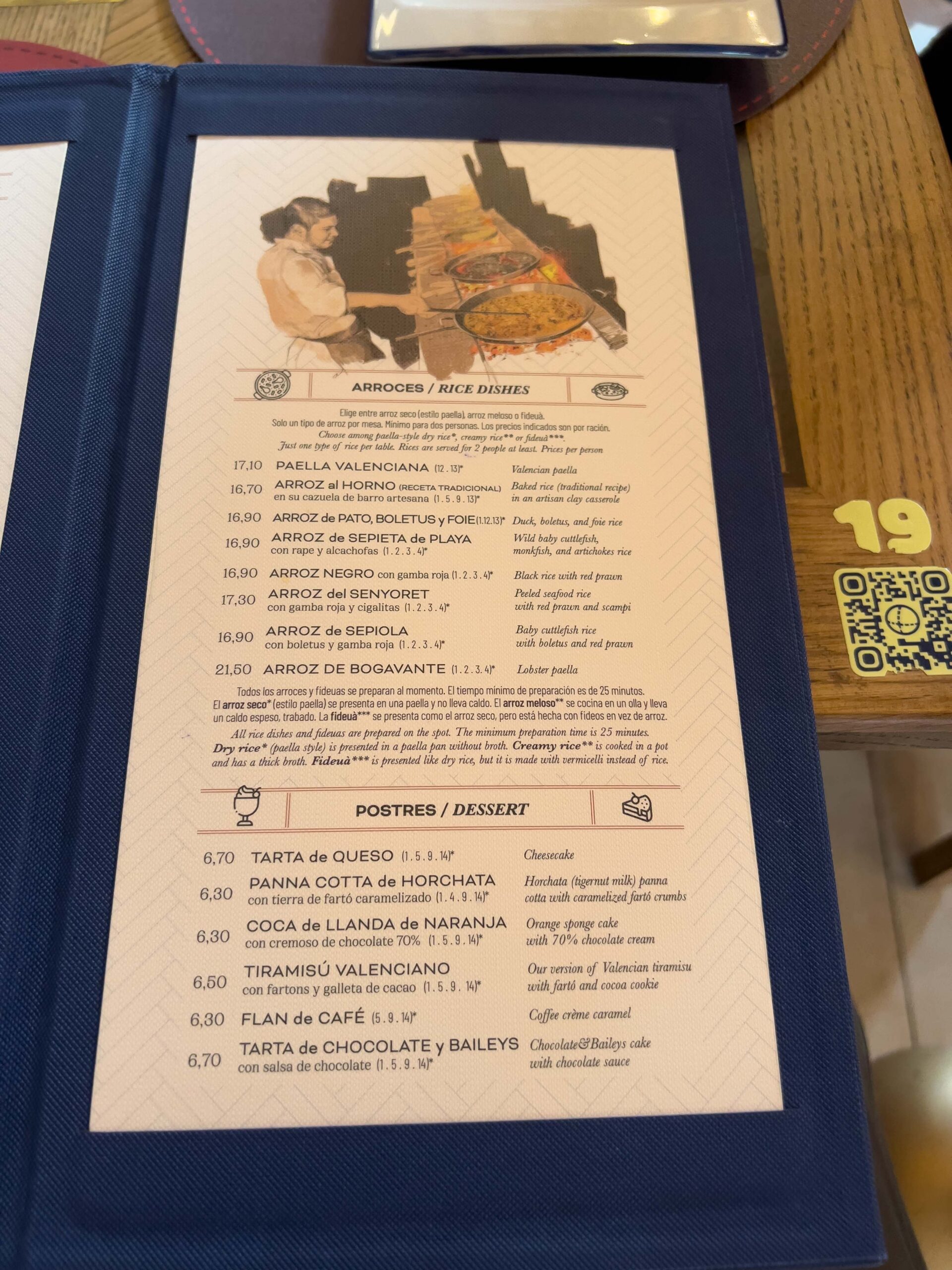
The highlight of the meal was the restaurant’s signature rice dish. Prepared fresh to order and served in a traditional paella pan, the rice featured rabbit (not necessarily our favorite), vegetables, broad beans, and fragrant rosemary. The grains were perfectly cooked, absorbing the deep flavors of the broth while developing the prized socarrat—the caramelized crust on the bottom of the pan that Valencians consider the mark of an exceptional rice dish.
As we enjoyed our lunch beneath the giant hand sculpture and surrounded by reminders of Valencia’s sporting culture, it became clear that Pelayo Gastro Trinquet offers much more than excellent food. It provides a window into the history of Valencia itself.
This was certainly one of the most authentically Valencian lunches we had, especially since we opted for the more traditional rabbit preparation. It wasn’t simply a restaurant visit; it was an immersion into the traditions, flavors, and character of a city that takes great pride in preserving its heritage while sharing it with visitors from around the world.