Tokyo is a city filled with remarkable restaurants, but every so often you encounter a dining experience that leaves a lasting impression. Our evening at Sushi Shin by Miyakawa was one of those occasions. It was a great introduction to the ceremony and ritual that can surround a sushi dining experience.
Located on the 38th floor of the Mandarin Oriental Tokyo, Sushi Shin immediately conveyed a sense of quiet confidence. There was no need for grand gestures or elaborate décor. Everything about the space reflected restraint, precision, and respect for tradition. The sushi counter itself had room for 12 so truly an intimate setting.
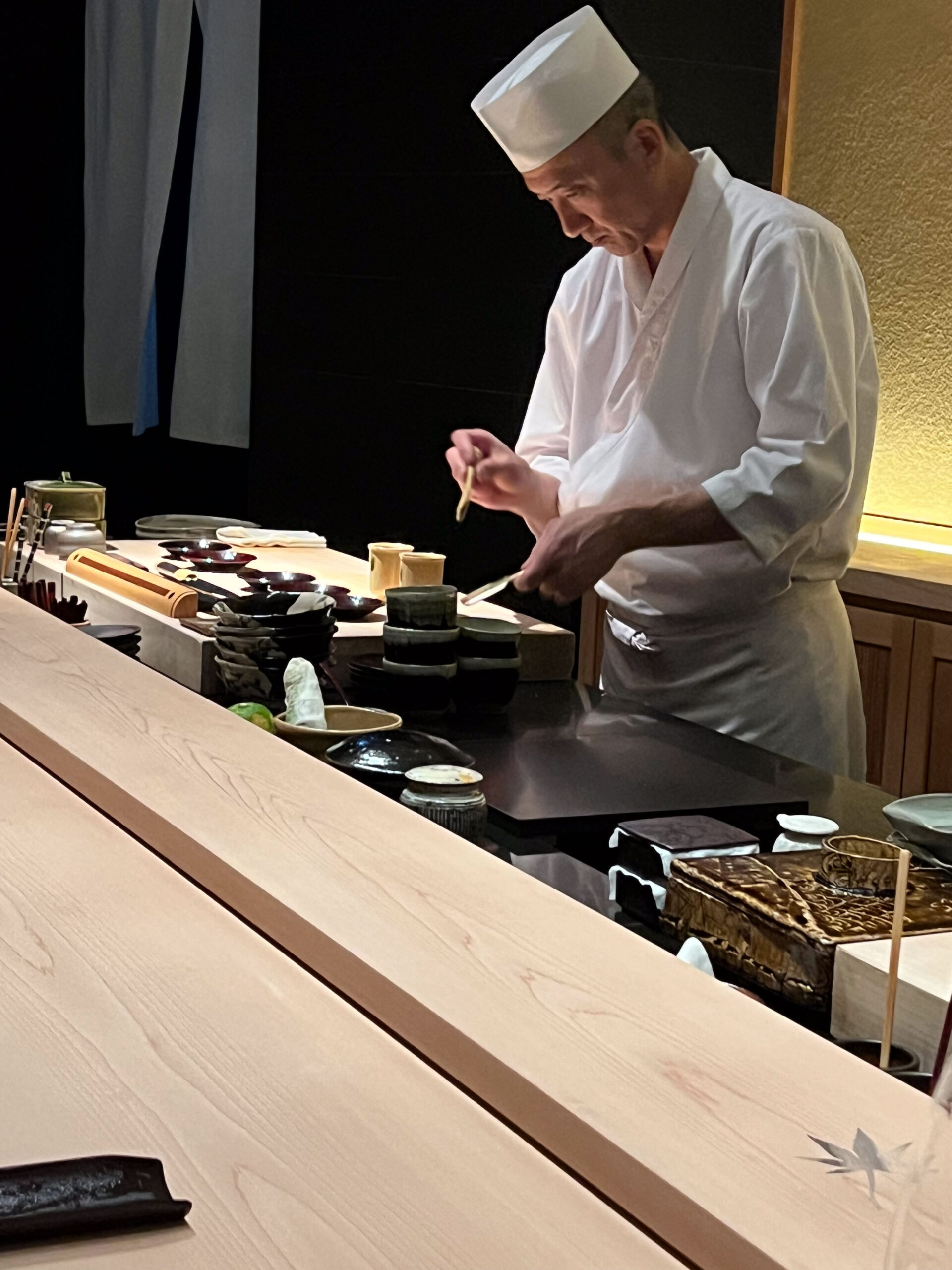
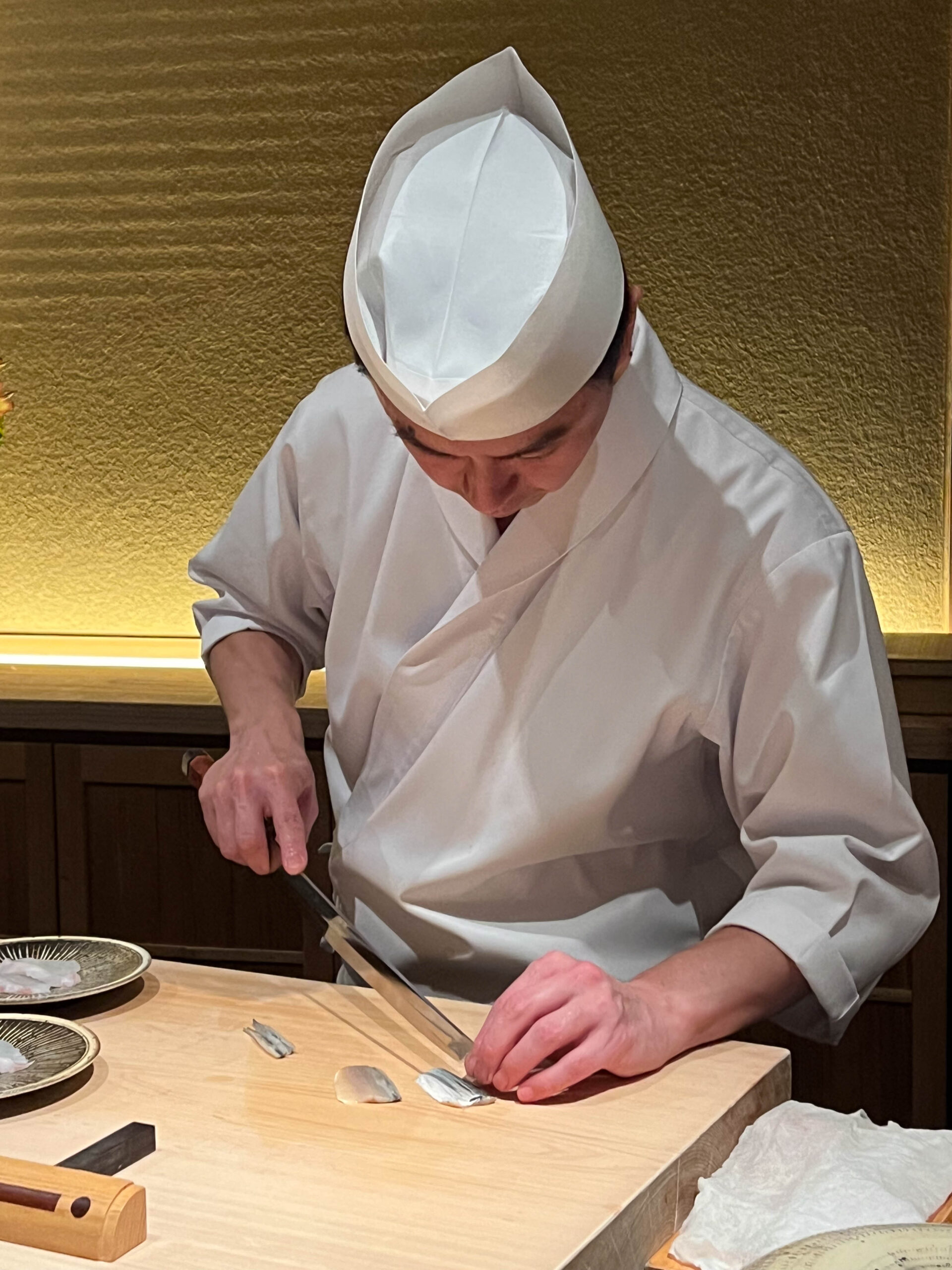
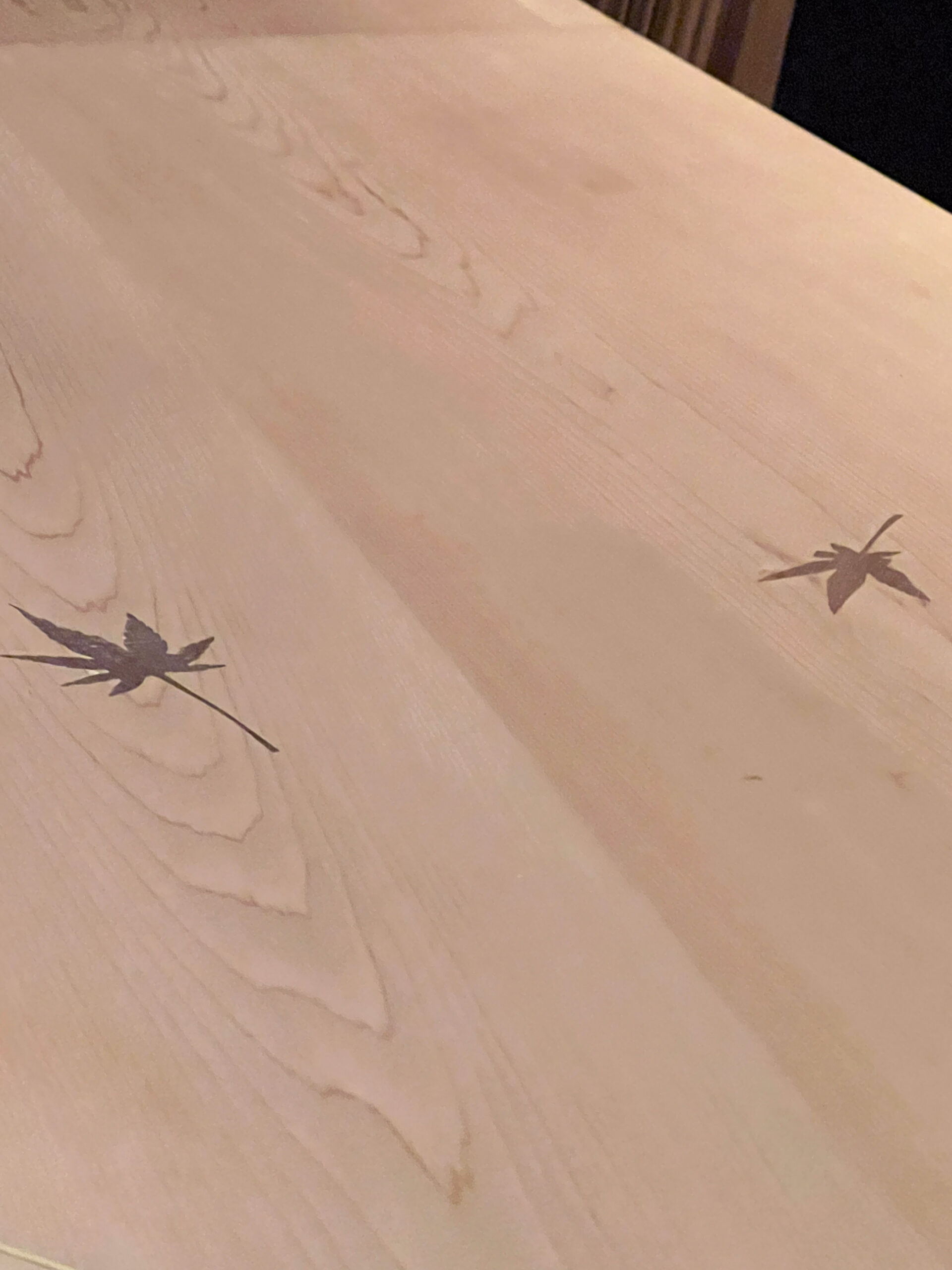
Upon entering, we were seated at a beautiful pale hinoki wood counter that stretched before the chef like a stage. Delicate maple leaf inlays adorned the surface, subtle reminders of the Japanese reverence for nature and seasonality. The counter itself became the focal point of the evening, a place where culinary artistry would unfold only a few feet from our seats. The hinoki cypress counter wood is apparently 350 years old.
From the moment the first course arrived, it was apparent that this would be far more than dinner. The chef worked with remarkable concentration, his movements deliberate and economical. Years of discipline were visible in every motion. Whether carefully slicing fish or arranging a garnish, there was a quiet rhythm to his work that captivated everyone seated before him.
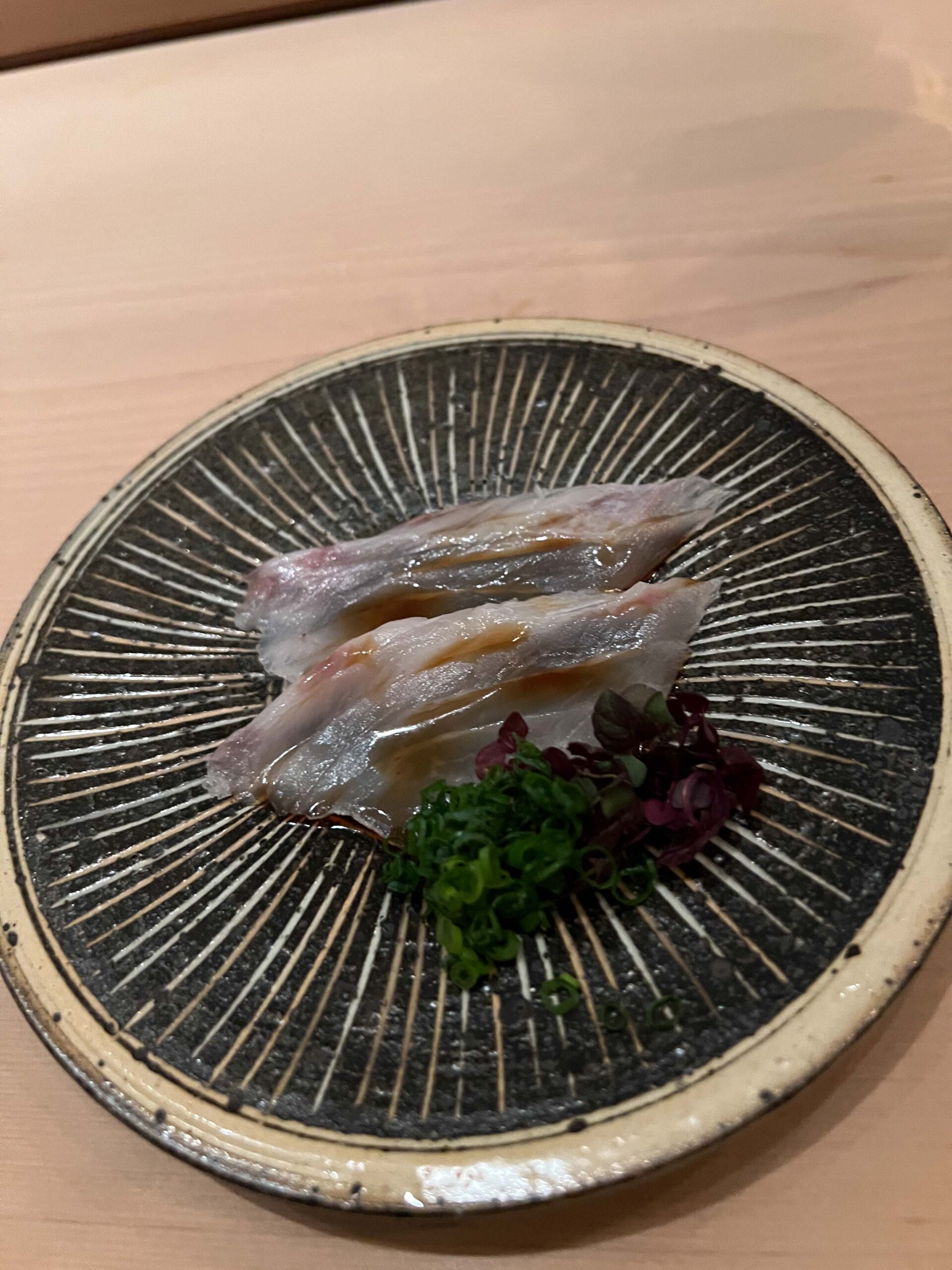
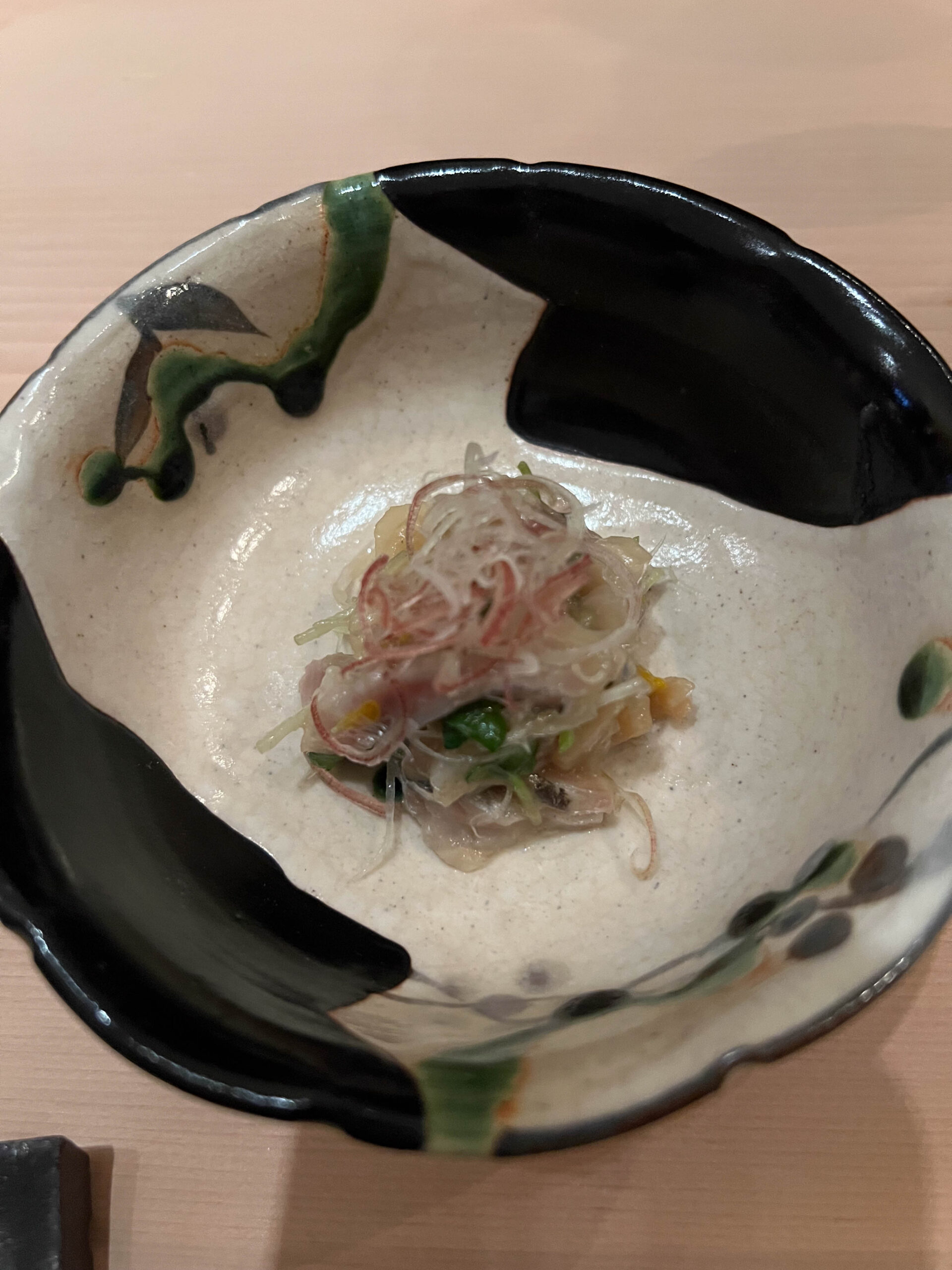
The opening dishes showcased pristine seafood in its purest form. Delicate slices of white fish arrived glistening on handcrafted ceramic plates, accompanied only by subtle garnishes that enhanced rather than overshadowed the ingredient itself. Every bite reflected a commitment to allowing the natural flavors of the sea to speak for themselves.
In the background, attentive beverage service took place, with an extensive wine list that complemented the evening’s meal. I hadn’t been sure if that would have been the case, but was delighted to add delicious sips along with wonderful bites.
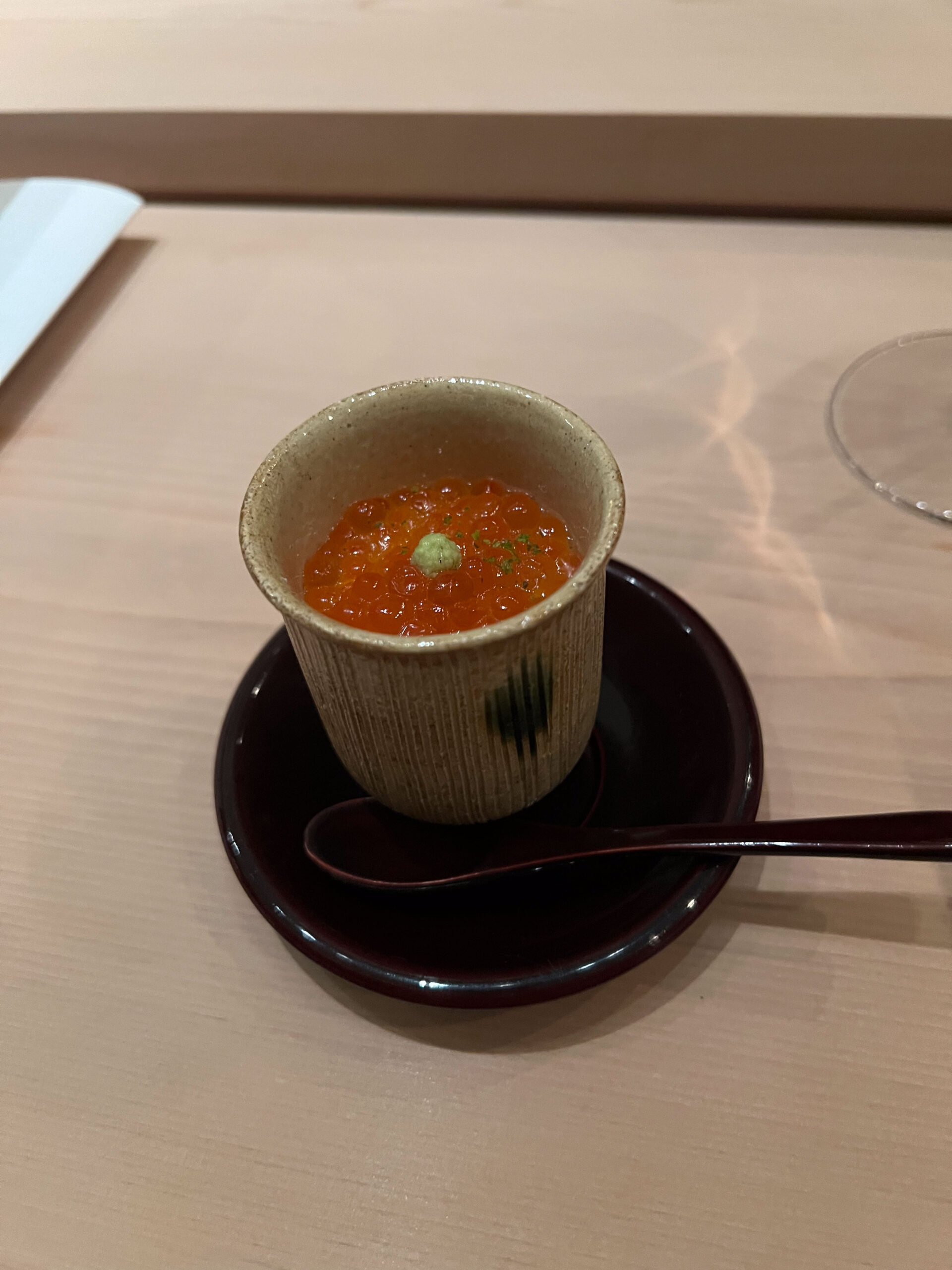
As the courses progressed, the meal revealed layer after layer of texture and flavor. A small cup filled with brilliant orange salmon roe provided one of the evening’s early highlights. The translucent pearls burst gently on the palate, releasing a clean, briny richness that perfectly captured the essence of the ocean.
Watching the chef prepare each course was a performance in itself. We observed him expertly portion fish with a razor-sharp knife, creating slices of extraordinary uniformity. His hands moved with calm precision, the result of thousands of hours spent refining a craft that borders on art.
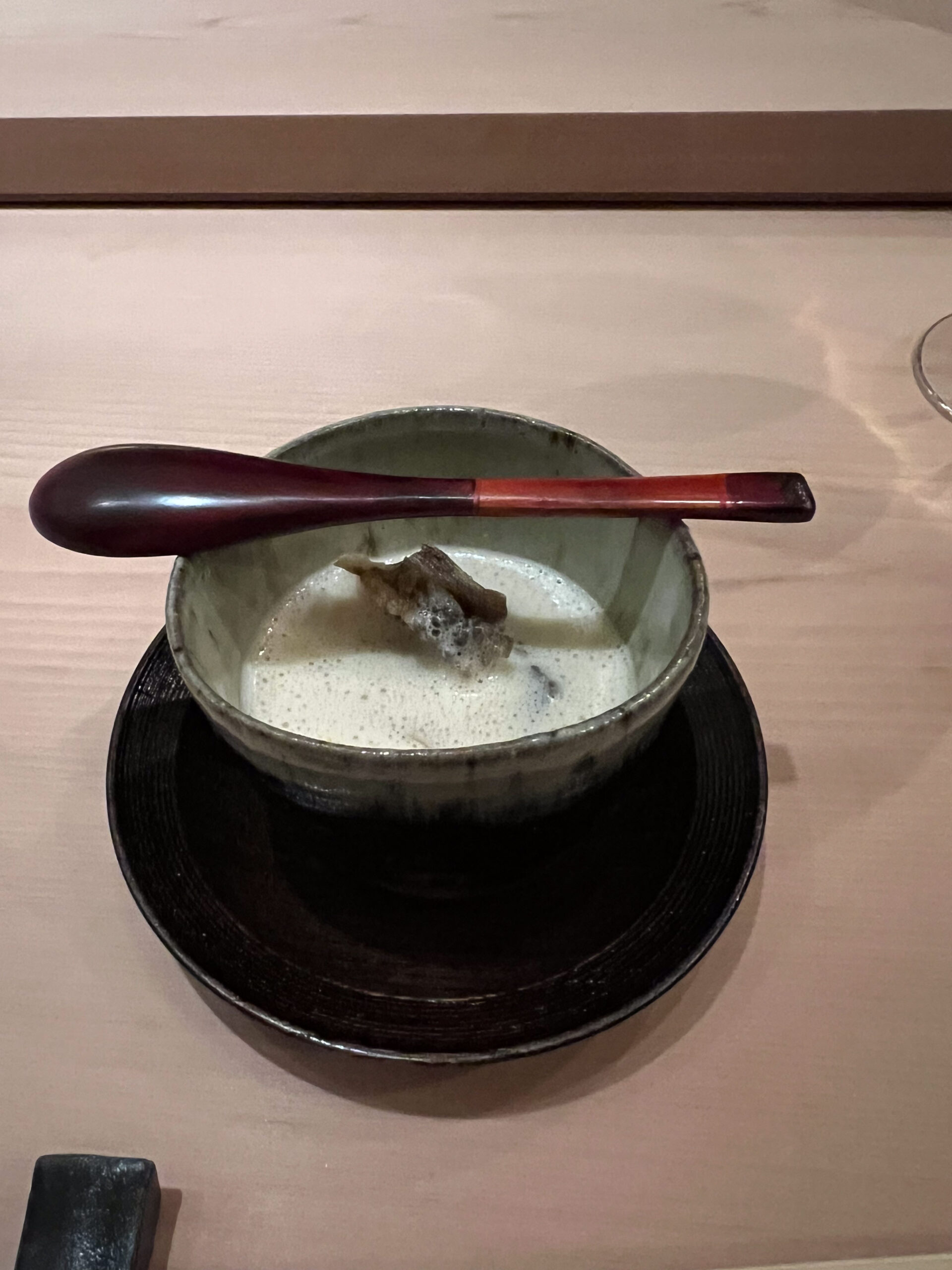
The experience was about far more than sushi alone. Throughout the evening, beautifully composed small plates appeared before us—delicate seafood preparations, carefully seasoned vegetables, warming broths, and subtle palate transitions designed to prepare us for the next course. Each dish felt intentional, contributing to a carefully orchestrated progression.
Equally impressive was the attention given to presentation. Handcrafted ceramics, lacquerware, and serving vessels complemented each course without ever distracting from it. The plates themselves seemed chosen specifically for each ingredient, reinforcing the Japanese philosophy that food and vessel should exist in harmony.
As the evening continued, anticipation grew for one of the stars of any exceptional sushi experience: bluefin tuna.
Then came the reveal.
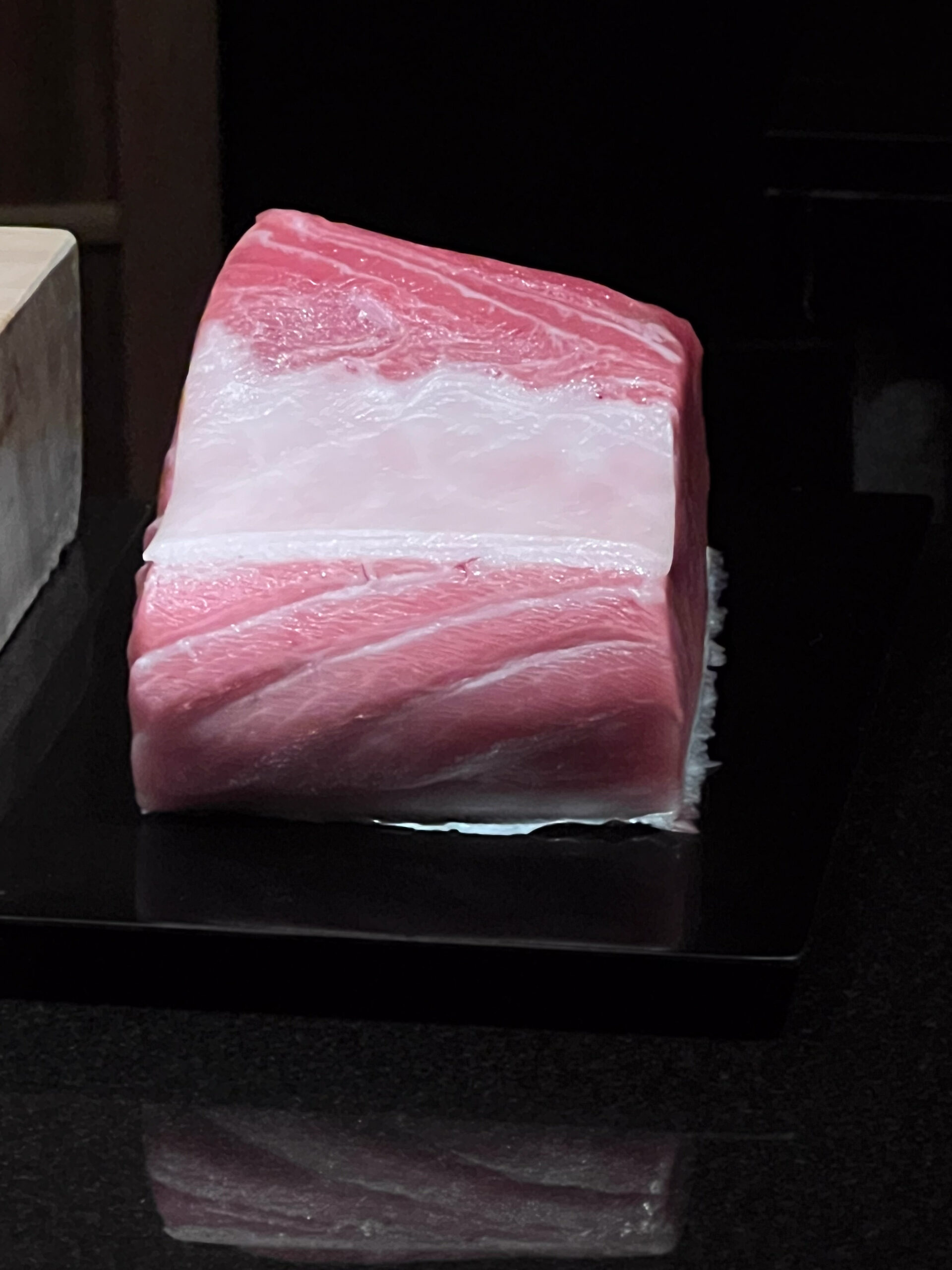
Before slicing, the chef presented a magnificent block of otoro, the prized fatty belly of bluefin tuna. Resting quietly before us, it resembled a work of art more than an ingredient. Layers of ruby-red flesh intertwined with delicate ribbons of ivory fat, creating marbling so intricate that it could easily be mistaken for the finest Wagyu beef. The sight alone generated murmurs of appreciation around the counter.
The courses that followed celebrated this extraordinary fish. Rich yet delicate, luxurious yet impossibly refined, the otoro demonstrated why it is regarded as one of the great treasures of Japanese cuisine.
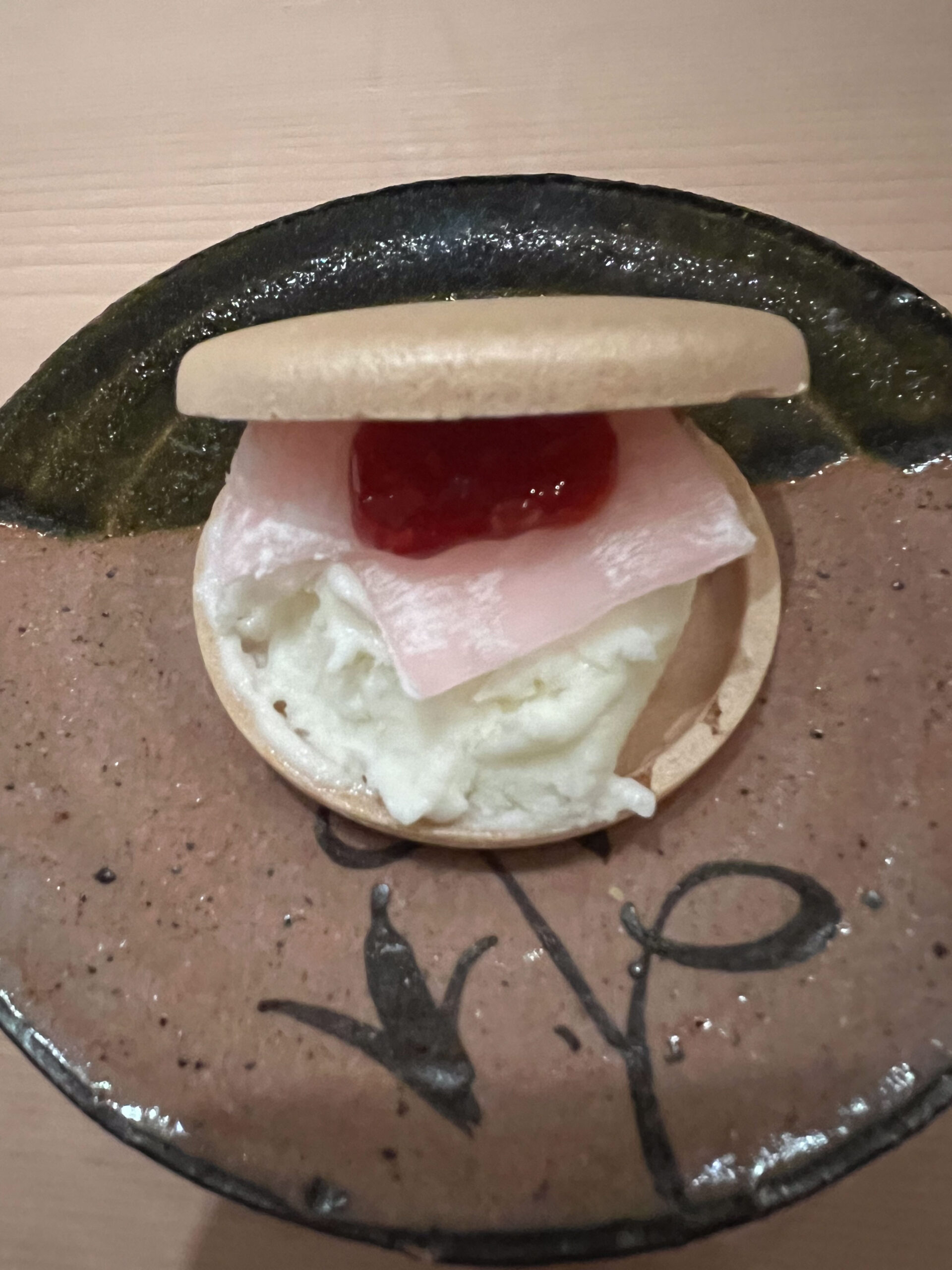
One of the evening’s most inventive creations featured a crisp wafer sandwich enclosing a creamy filling, topped with a thin slice of fatty tuna and crowned with glistening salmon roe. It was playful and elegant at the same time—a combination of textures and flavors that perfectly balanced innovation with tradition.
By this stage, we had stopped thinking of the meal as a sequence of dishes. Instead, it felt like a journey through the seasons, the sea, and the chef’s lifelong dedication to mastery. Every course built upon the previous one, revealing new nuances while maintaining an unwavering commitment to simplicity and excellence.
What made the evening truly memorable was not merely the extraordinary quality of the ingredients, although they were exceptional. It was the respect evident in every aspect of the experience: respect for the fish, respect for tradition, respect for craftsmanship, and respect for the guests fortunate enough to witness it all unfold.
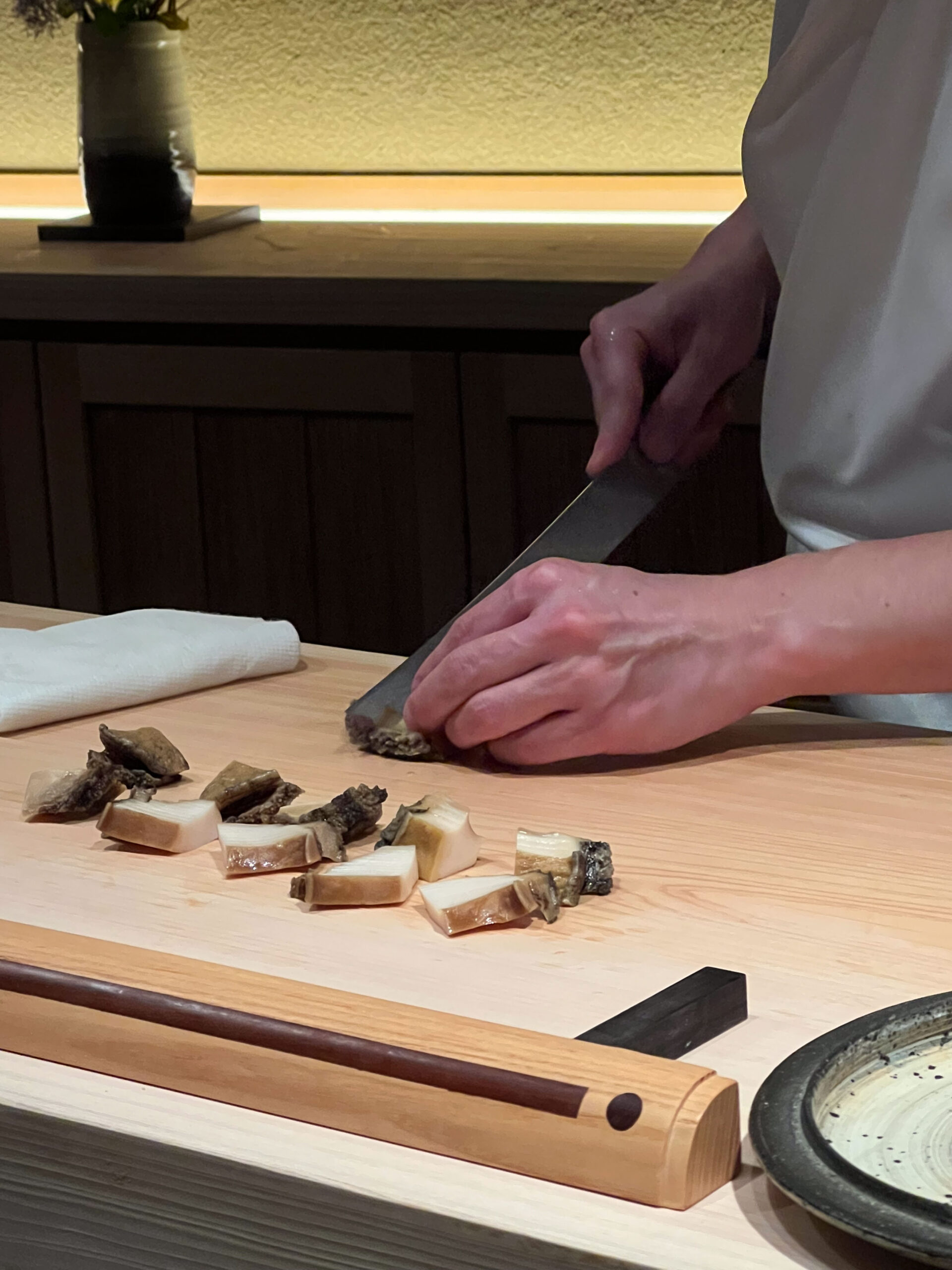
As the final plates were cleared and the evening came to an end, the counter grew quiet. The experience lingered long after the meal itself was finished. We left carrying vivid memories—the warm glow of the restaurant, the beauty of the handcrafted table, the concentration of the chef, the burst of salmon roe, the tenderness of the abalone, and the breathtaking marbling of that magnificent block of otoro.
In a city celebrated worldwide for its culinary excellence, Sushi Shin by Miyakawa delivered something truly special. It was not simply one of the finest meals of our visit to Tokyo. It was a reminder that great dining can be an expression of artistry, discipline, and hospitality—an experience that nourishes both the palate and the soul.
For us, it remains one of the most memorable culinary experiences we have enjoyed anywhere in the world.